Worn Fastener Washers
The rubber washer under each screw dries and cracks in sun and cold. Rain then runs down the screw shank, and the stain shows up inside along a purlin line.
Commercial Metal Roof Repair
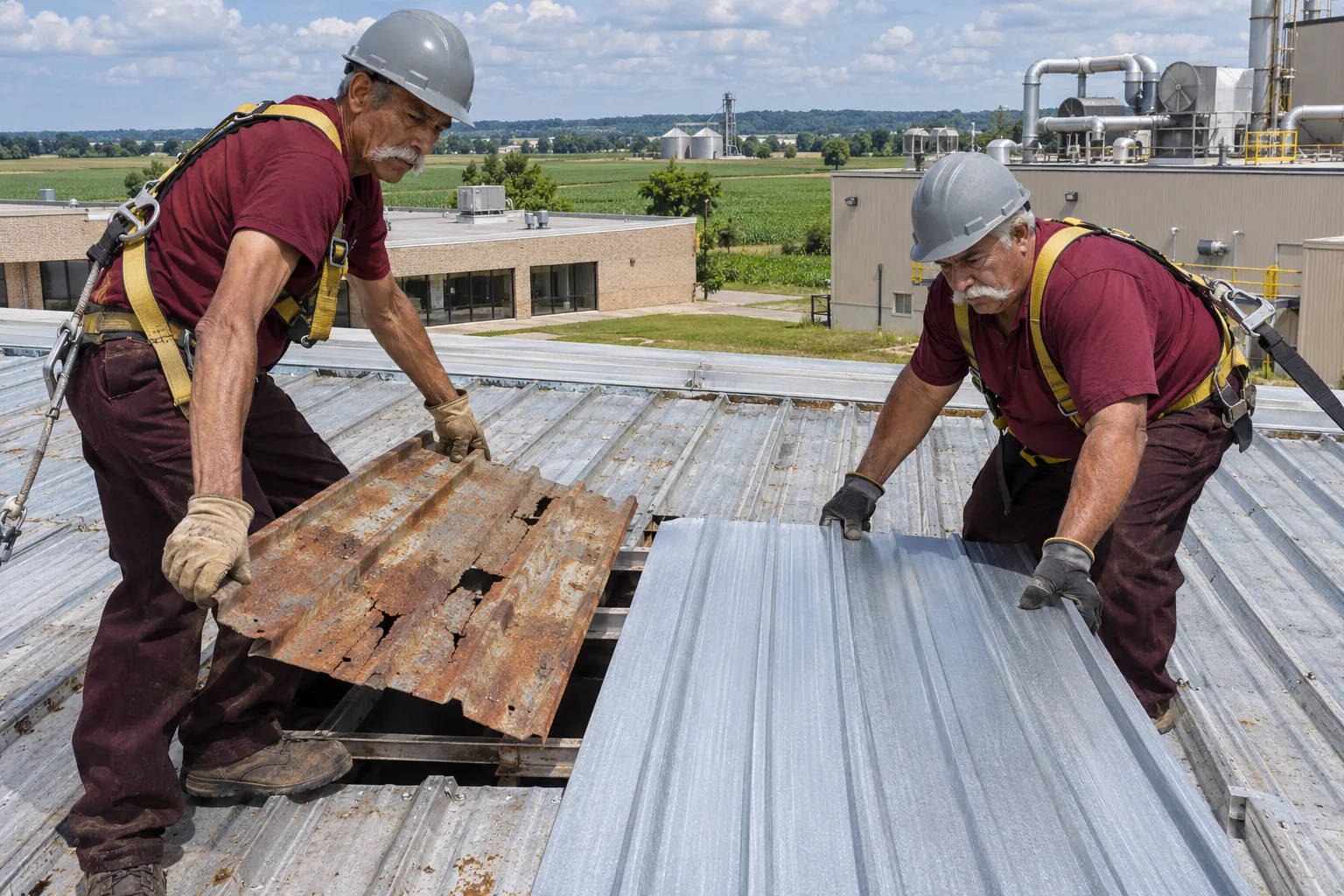
As a Lafayette commercial metal roof repair contractor, we replace worn fasteners, reseal laps, and swap rusted panels on shops, plants, and storage buildings.
Most metal roofs leak at details, so Lafayette commercial metal roof repair often costs far less than new panels. This table shows where the line falls.
| Condition | Repair Fits | Plan For More |
|---|---|---|
| Fasteners | Loose, or with cracked washers | Stripped holes across most purlins |
| Panels | A few rusted or dented sheets | Rust-through across many runs |
| Laps | Open at end laps and eaves | Gaps along nearly every side lap |
| Framing | Firm purlins and girts | Rusted or bent framing under the panels |
| Trim and skylights | A lifted ridge cap or a cracked skylight | Most trim loose after years of wind |
Metal roofs fail at their details long before the steel wears out. These six are where we look first.
The rubber washer under each screw dries and cracks in sun and cold. Rain then runs down the screw shank, and the stain shows up inside along a purlin line.
Where one panel overlaps the next near the eave, snow and meltwater sit longest. Butyl tape in those laps hardens, and water wicks uphill through the gap.
Cut edges and scratched paint rust first. Left alone, red rust spreads under the finish and thins the steel until a screw pulls through or a hole opens.
Fiberglass skylight panels yellow, crack, and lose their seal at the laps. Hail speeds that along, and every crack lets water straight onto the floor below.
Ridge caps, rake trim, and foam closures hold back wind-driven rain. Wind loosens their screws, and a flapping trim piece tears the holes larger with each storm.
Exhaust fans, vent pipes, and curbs cut through ribs and valleys. Their flashing boots split and their sealant shrinks, so water slips in around the opening.
Repairing a metal roof at its weak details keeps good panels in place for years.
Most of the steel on a leaking metal roof still has life left. Fixing screws, laps, and trim keeps those panels working instead of paying to replace them.
Wire-brushing and priming the surface rust on neighboring panels slows the corrosion that would otherwise reach the next sheet and the fasteners holding it.
Tight trim, new closures, and fresh screws give wind fewer loose edges to grab, which keeps a small gap at a ridge cap from becoming a torn panel.
Leaks over machines and stored goods stop at the roof opening, and work is staged so only one small section of panels is open at a time.
That pattern points to fastener leaks. Call and tell us roughly where the drips land, and we will check the screws and laps above them.
(574) 384-0757
Metal repairs follow four steps, from finding the open fasteners to checking the finished laps.
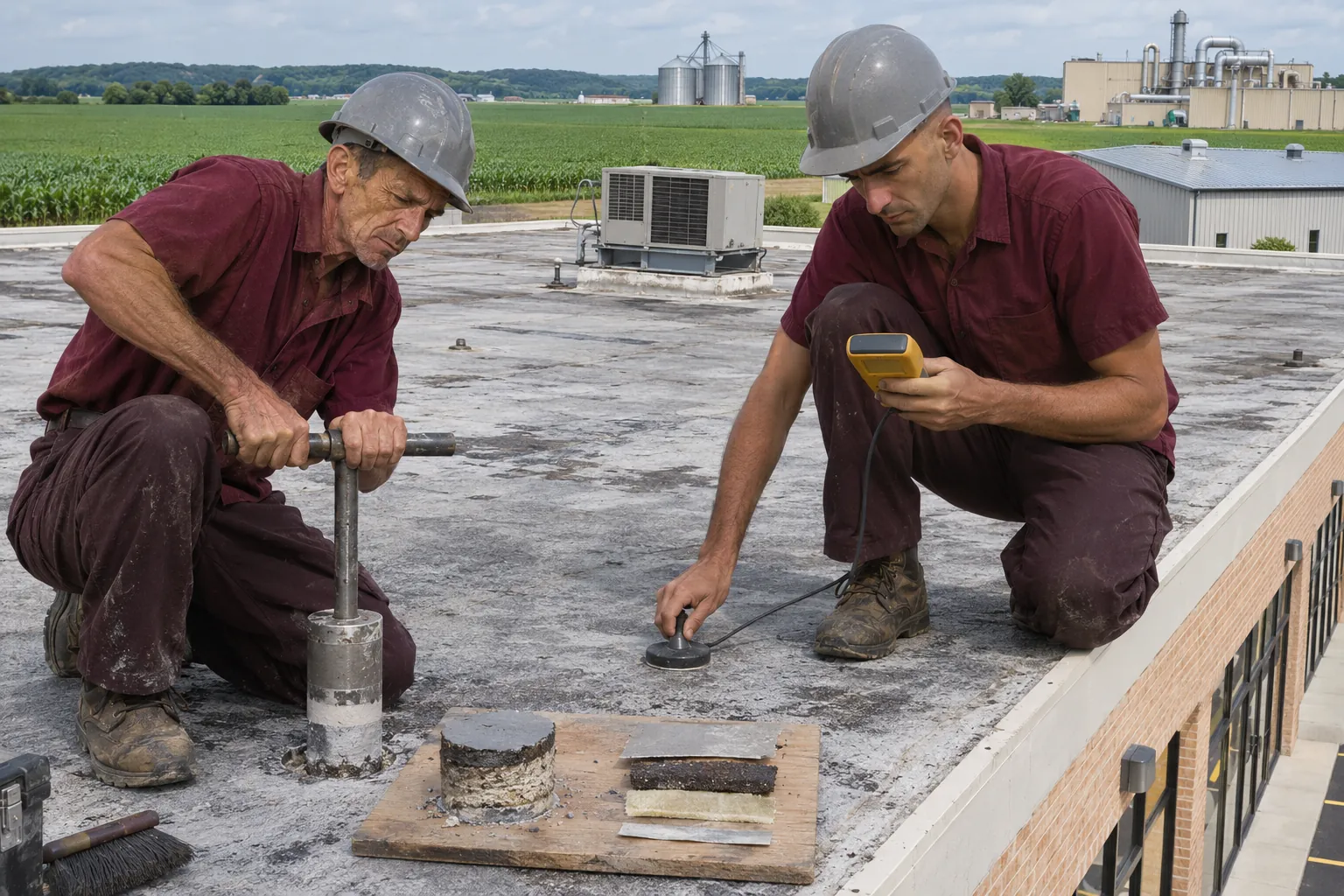
We walk the panels and check screws, washers, laps, trim, and each penetration, then look at the underside from inside for drips and rust on the purlins.
Profile, gauge, and finish are measured, so any replacement panel lines up with the ribs around it and seals at both of its laps.
Rusted sheets come out, new butyl tape goes into the laps, oversized screws with fresh washers go into solid framing, and nearby surface rust is cleaned and primed.
After the repairs, we look at the deck underside again, ideally during a rain, and photos of every repaired lap and panel go to the owner.
Many metal buildings also have flat sections, rooftop units, or process vents.
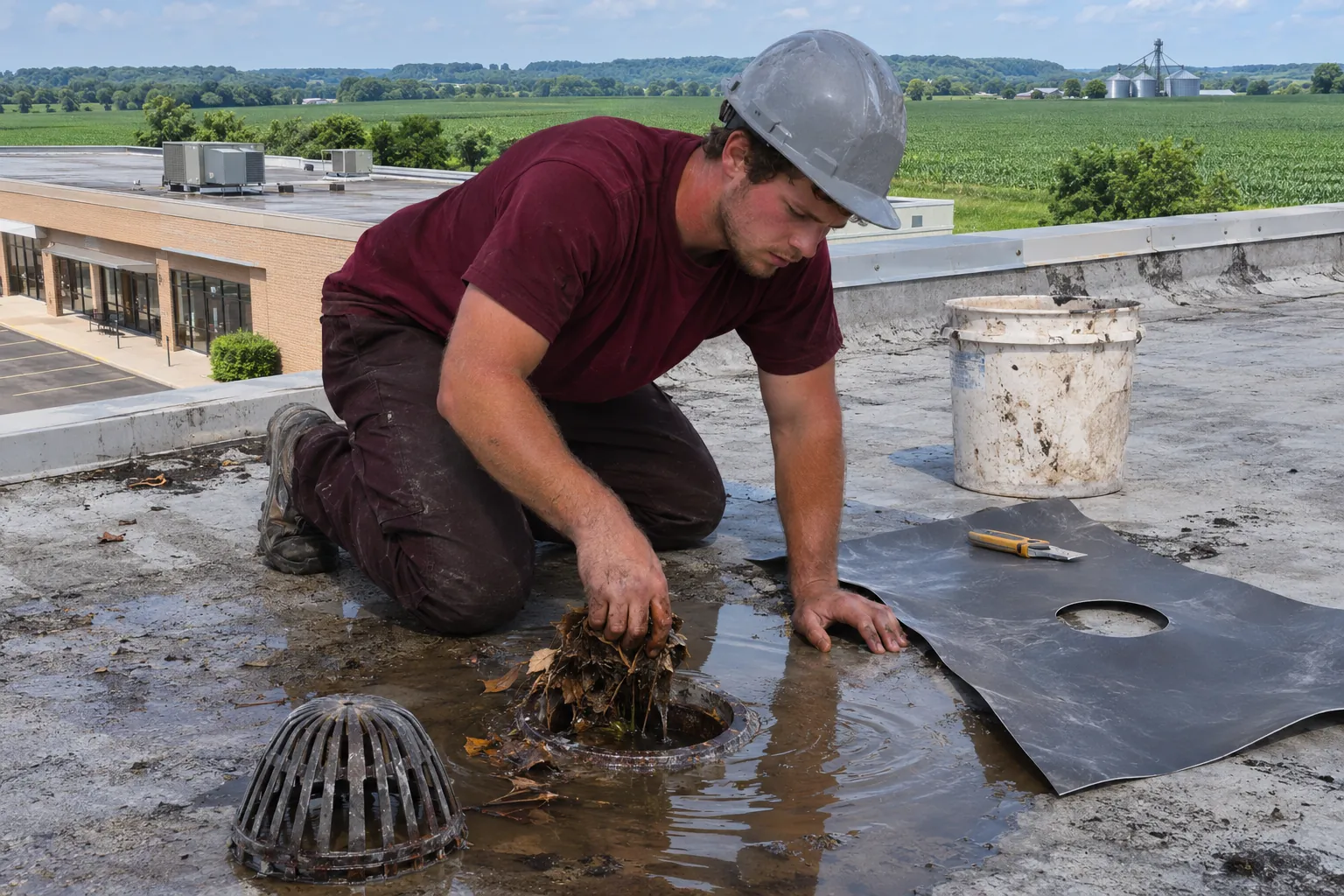
Low-slope offices and additions built onto a metal shop get their own membrane repairs at seams, drains, and wall flashing.
More on flat roof repair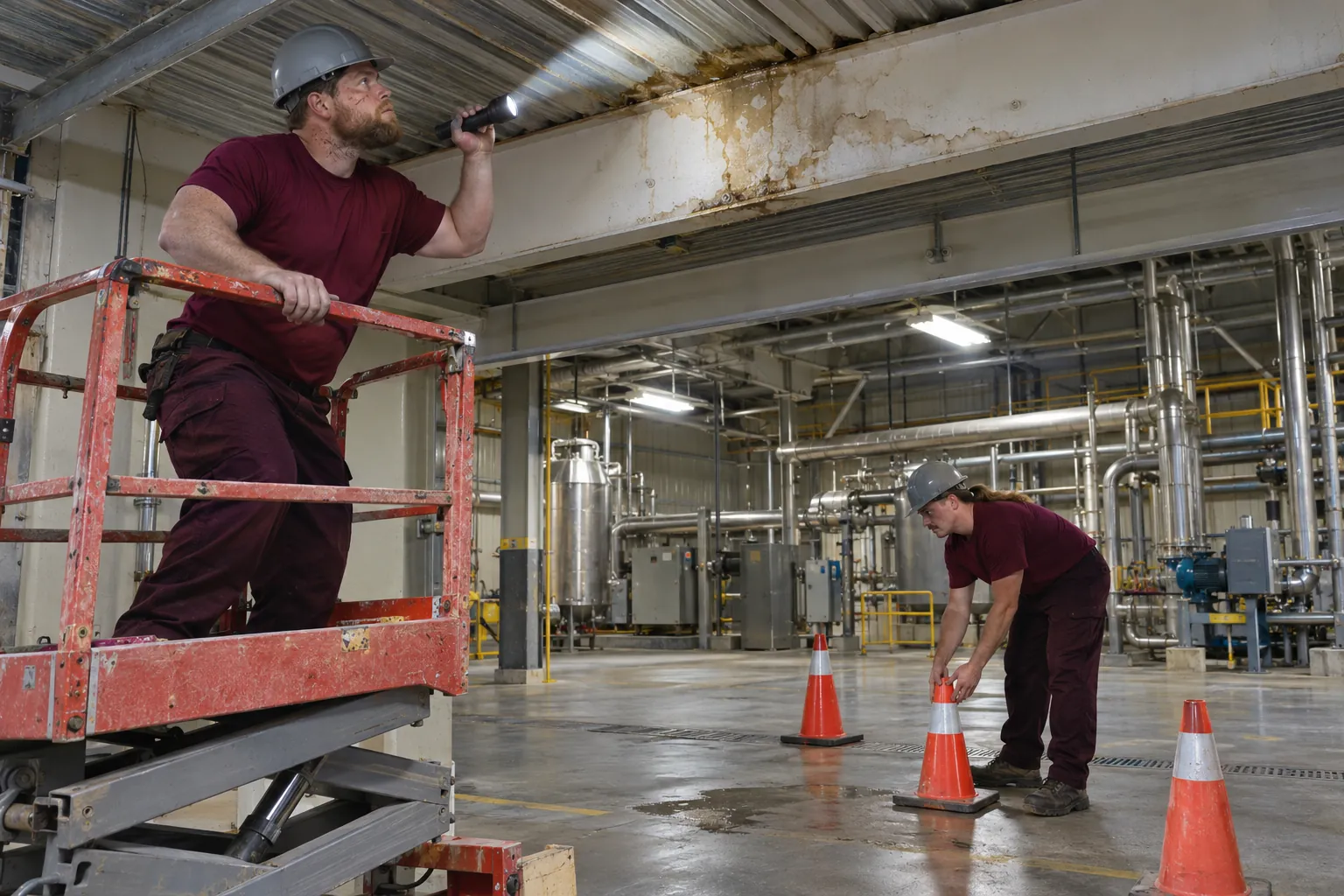
When water shows up between purlins with no obvious cause, we trace it from inside the building to the lap or screw above.
More on commercial roof leak repair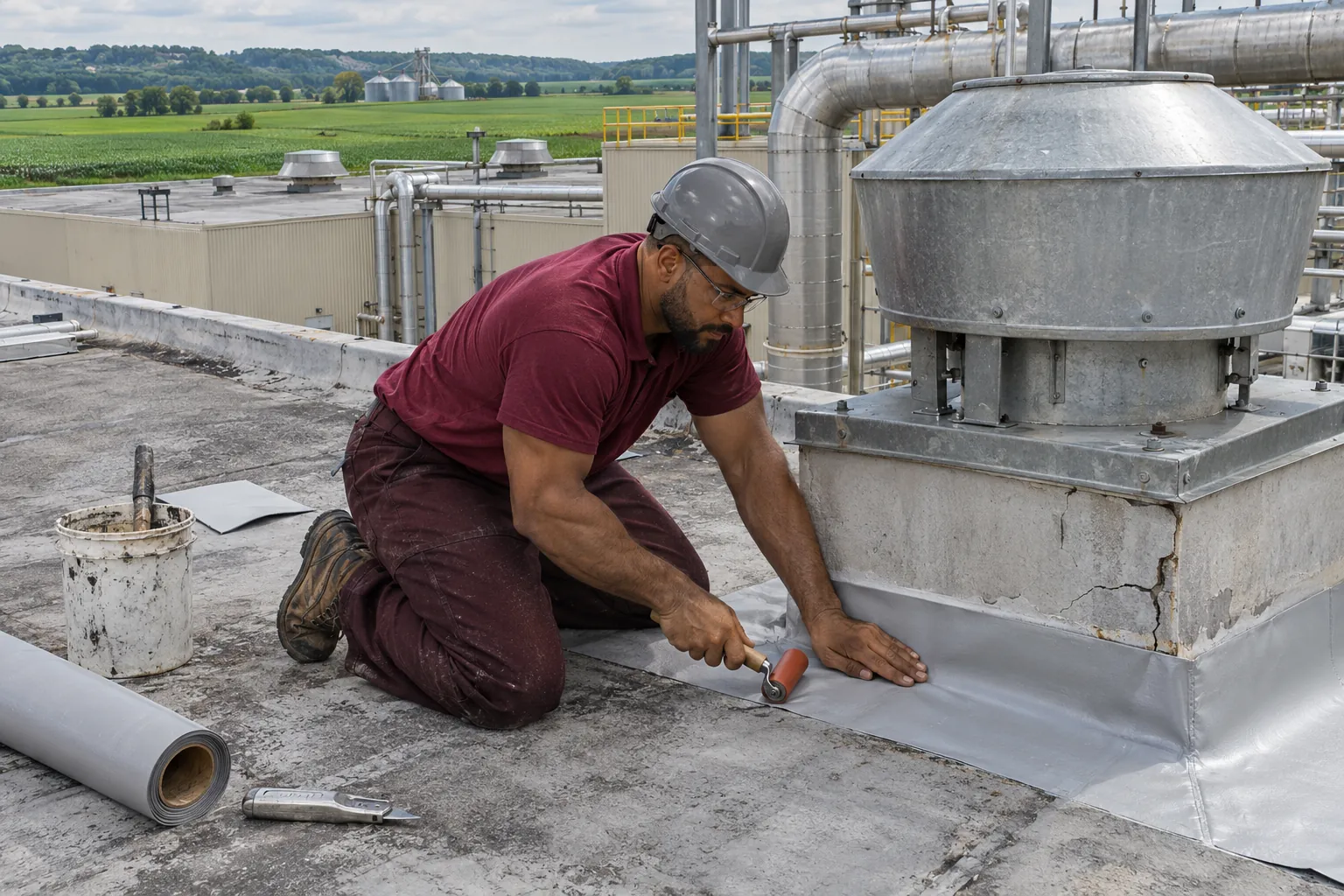
Metal plant roofs with fans and stacks need flashing and fastener repairs set around the plant safety rules.
More on industrial roof repairPlain answers on panels, seams, and how long metal roofs last.
Panels And Seams
We pull the fasteners, slide the rusted sheet out from under the panel upslope, and set a new one of the same profile, gauge, and finish. Laps get fresh butyl tape, and new screws with new washers go into solid framing. Surface rust on the panels beside it is cleaned and primed.
The seam is cleaned, loose or missing stitch screws are replaced, and the lap is resealed with butyl tape, a compatible sealant, or reinforced tape that fits the panel profile. On standing seam roofs, seams are re-crimped and clips checked. End laps at the eaves get the closest look.
Repair Or Replace
Often, yes. Most metal roof leaks start at fasteners, laps, flashings, skylights, and penetrations, and each of those is repaired without touching the rest of the roof. Single rusted panels are swapped. Replacement makes sense once rust-through is widespread, the framing is failing, or repairs would cover most of the roof.
Many commercial metal roofs last 30 years or more. The finish and gauge of the panels, upkeep of fasteners and washers, drainage at gutters and eaves, and moisture or residue from processes below decide the real number. Exposed fasteners wear out long before the panels do.
Plants And Hail
On big plant roofs, the work centers on rooftop equipment: flashing at curbs, exhaust fans, and pipe penetrations, plus screw and lap repairs where vibration loosens fasteners. Skylights and hatches need resealing too. Repairs follow plant safety rules and production schedules, and every opening is closed watertight each day.
First comes an inspection that photographs and dates each dent, crack, puncture, and bruise, plus damaged skylights, vents, and gutters. Then punctured membrane is patched or replaced in sections, cracked metal and flashing are repaired, and wet insulation under the damage is replaced. The dated photos support an insurance claim.
Tell us the building type and where the drips land. We will check the fasteners, laps, and trim and price the repair.