Crowded Equipment Curbs
Labs and offices carry many rooftop units, exhaust fans, and vents close together. Flashing between tight curbs is hard to service, so it splits and stays split.
Service Area
As a West Lafayette commercial roof repair contractor, we fix leaks over labs, offices, and shops while the people below keep working.
West Lafayette commercial roof repair here mostly happens over rooms that stay in use, so the plan starts with the people below.
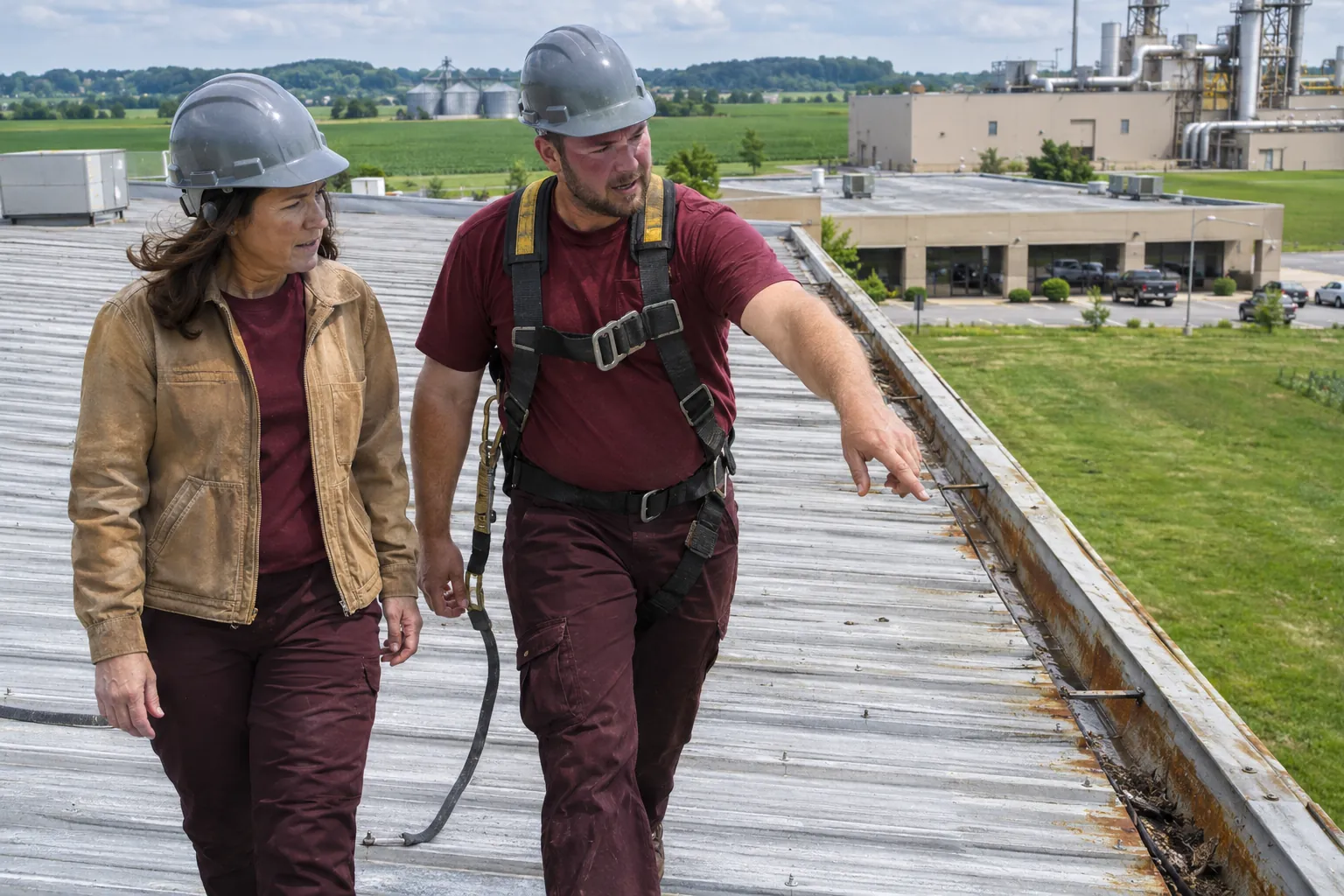
Research space, offices, and storefronts near campus rarely empty out for a roof job. We open one small area at a time, cover it at the end of each day, and keep torches and kettles away from air intakes that feed occupied rooms.
Tenants get notice of noisy work and rooftop access times before we arrive. For buildings in the New Chauncey Historical District, the city review comes first, and we plan the repair to fit what that review allows.
These roof problems show up most on the occupied buildings we repair here.
Labs and offices carry many rooftop units, exhaust fans, and vents close together. Flashing between tight curbs is hard to service, so it splits and stays split.
Crushed insulation along service paths leaves low spots that hold water above offices. Each storm adds weight and wear to the membrane there.
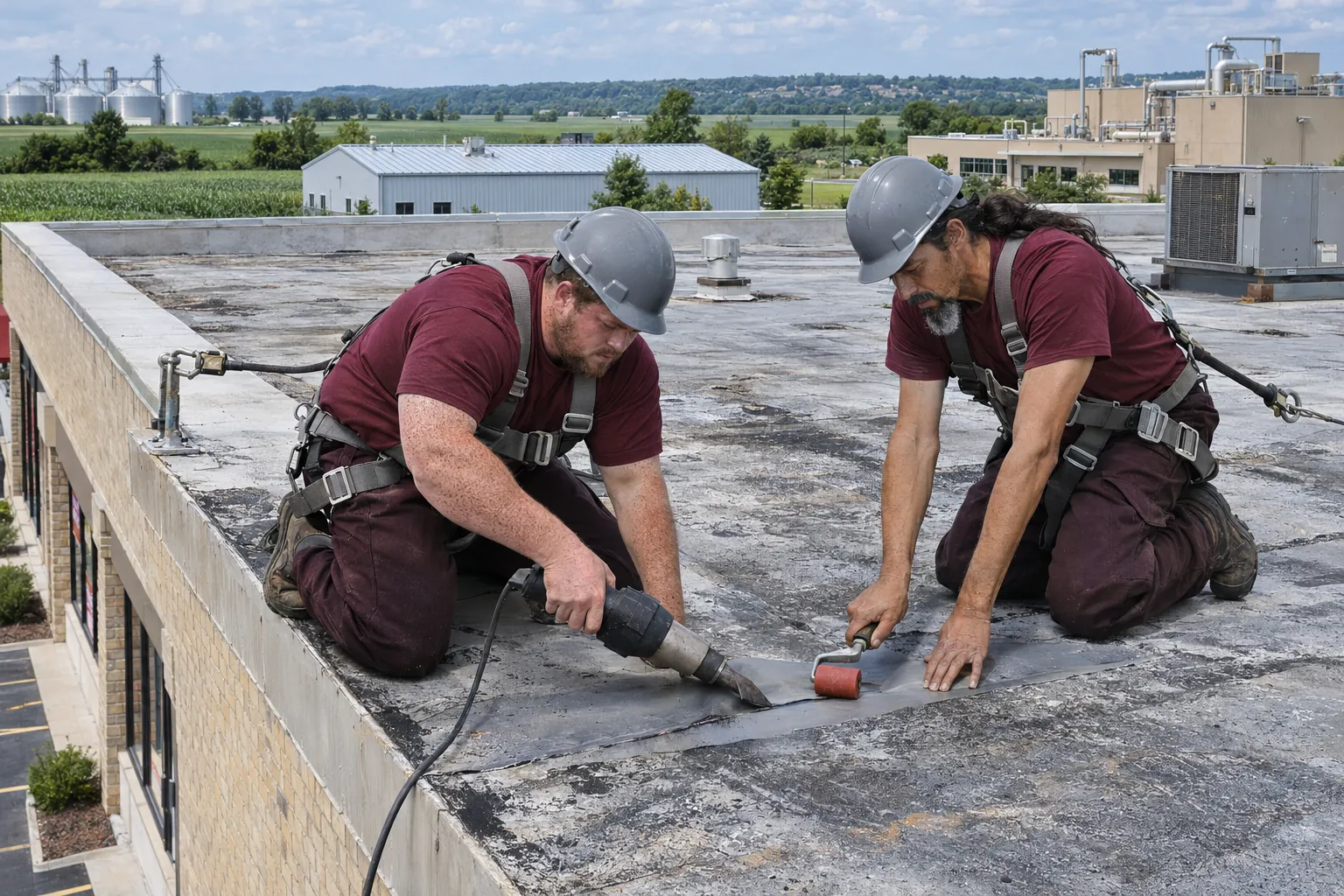
Foot traffic to equipment scuffs and lifts welded laps. An opened lap near a unit leaks into the ceiling space right below a working room.
Brick parapets on older storefront blocks crack at the coping. Water enters the wall cavity and shows up along interior walls instead of the ceiling.
Tree-lined streets near campus drop leaves onto low roofs every fall. Packed strainers send water over the drain flashing and under the membrane.
Small drips over workstations get reported fast but traced slowly. Without a trace, tiles get swapped while the opening on the roof keeps growing.
Phasing a repair protects the work going on under the roof as much as the roof itself.
Opening only a small roof area at a time lets labs, offices, and shops below keep their schedules during the repair.
Shielding intakes and choosing low-odor adhesives near units keeps fumes from the membrane work out of occupied rooms.
Advance notice of loud work and roof access helps tenants plan meetings and deliveries around the crew on the roof.
Starting city review before the repair keeps work on New Chauncey buildings from stalling halfway through a parapet or roof edge.
Three services match the occupied buildings here.
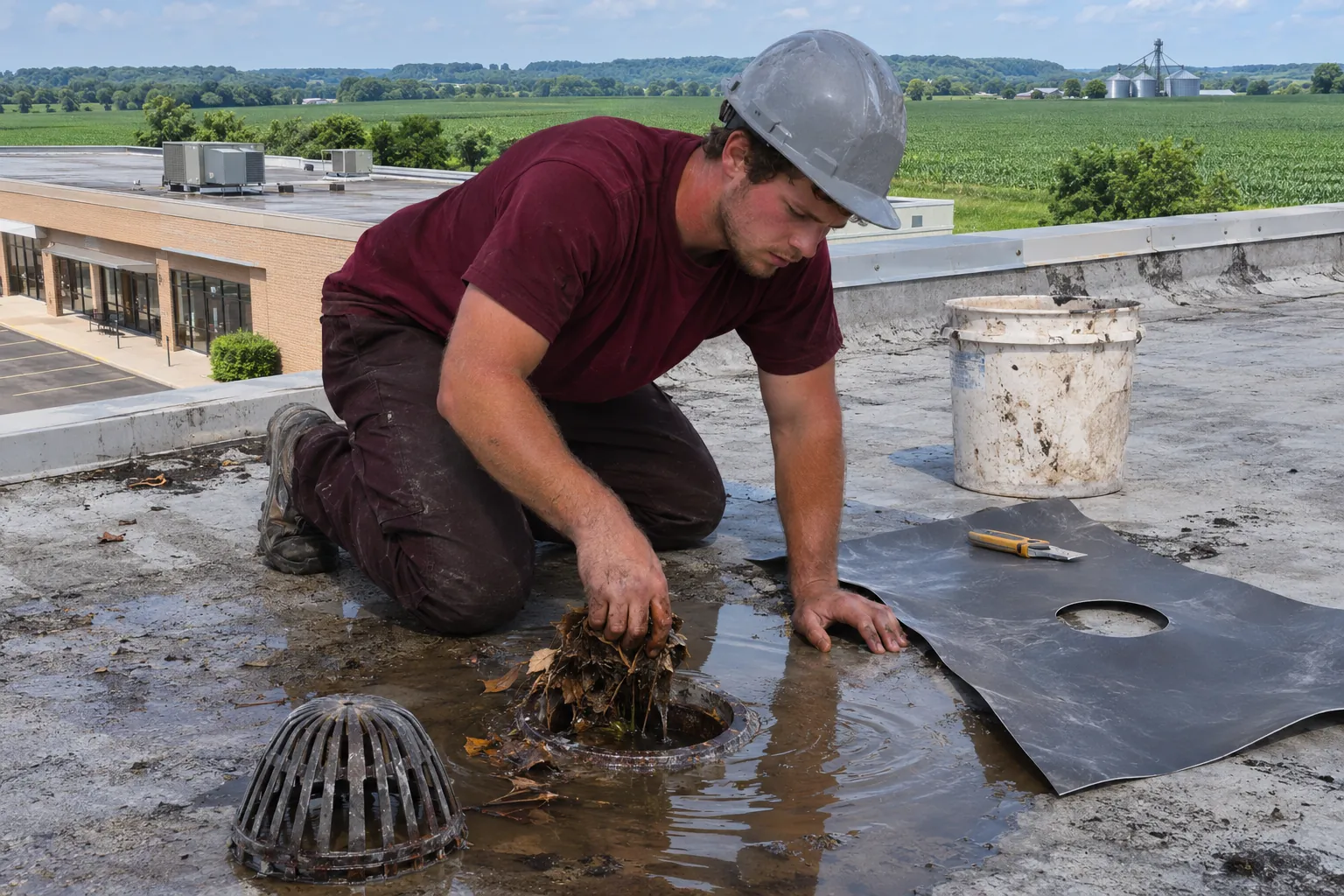
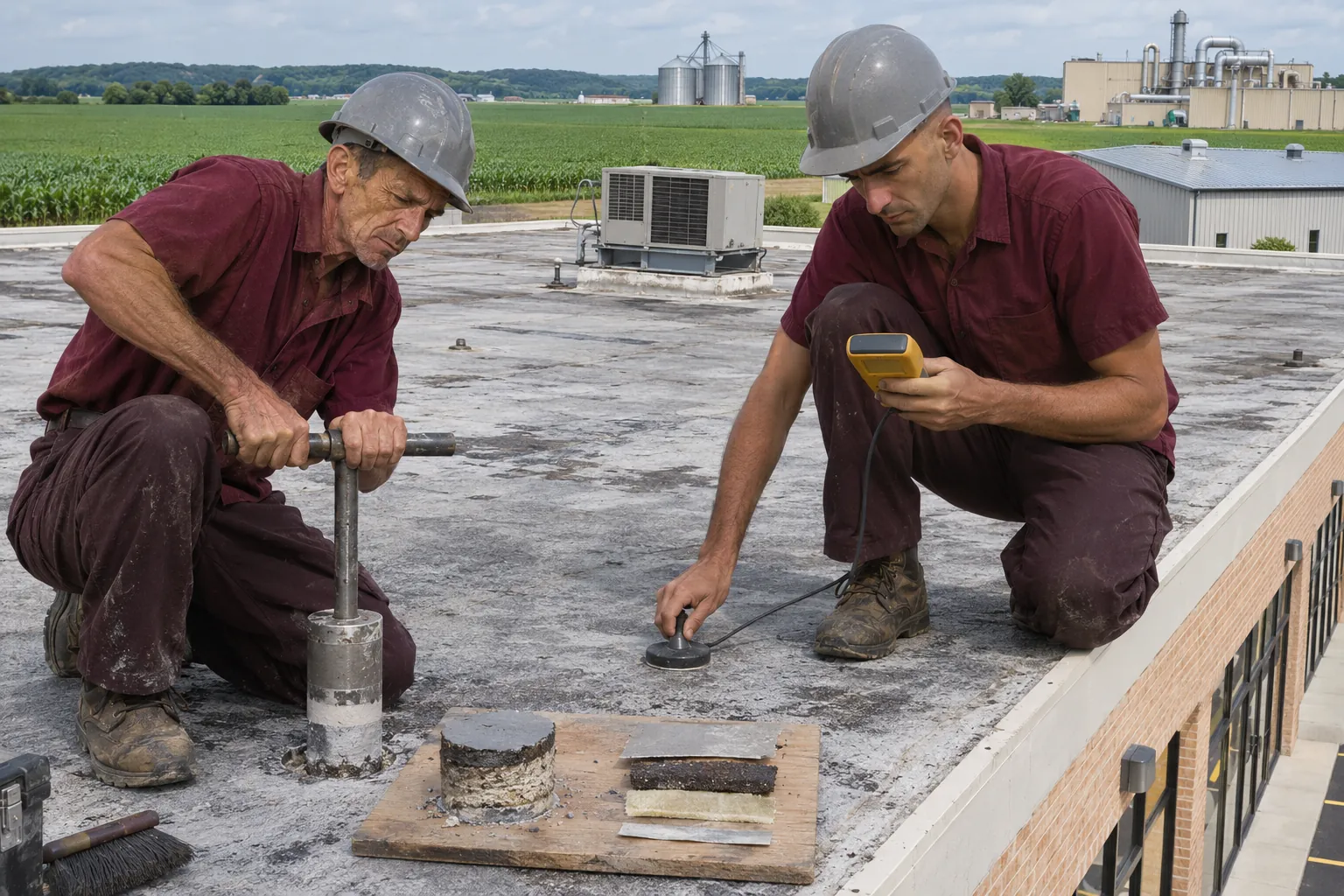
Low-slope roofs over offices and labs get seam, drain, and wet insulation repairs done one small section at a time.
More on flat roof repair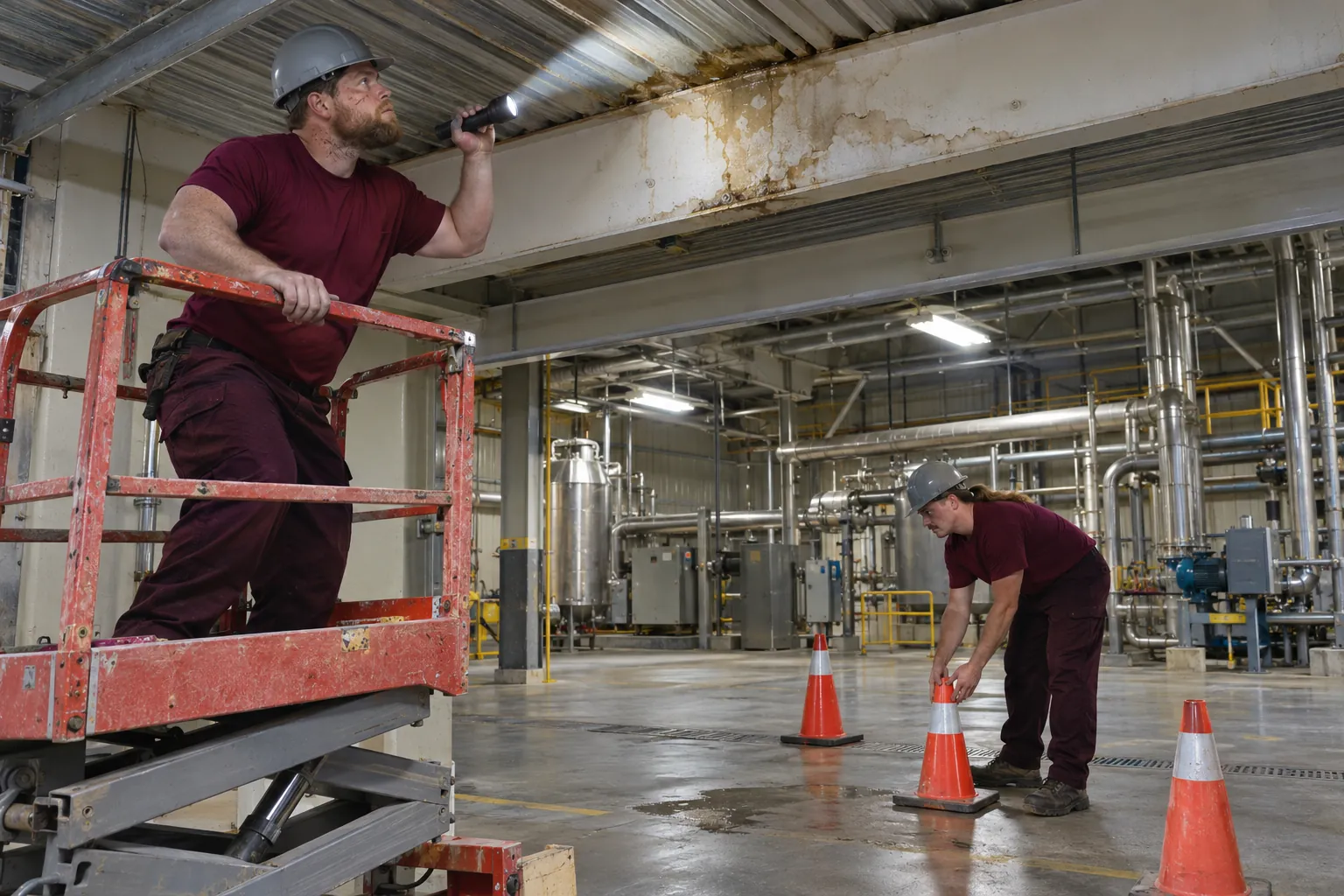
Drips over desks and benches get traced from the ceiling to the curb, vent, or lap that lets the water in.
More on commercial roof leak repair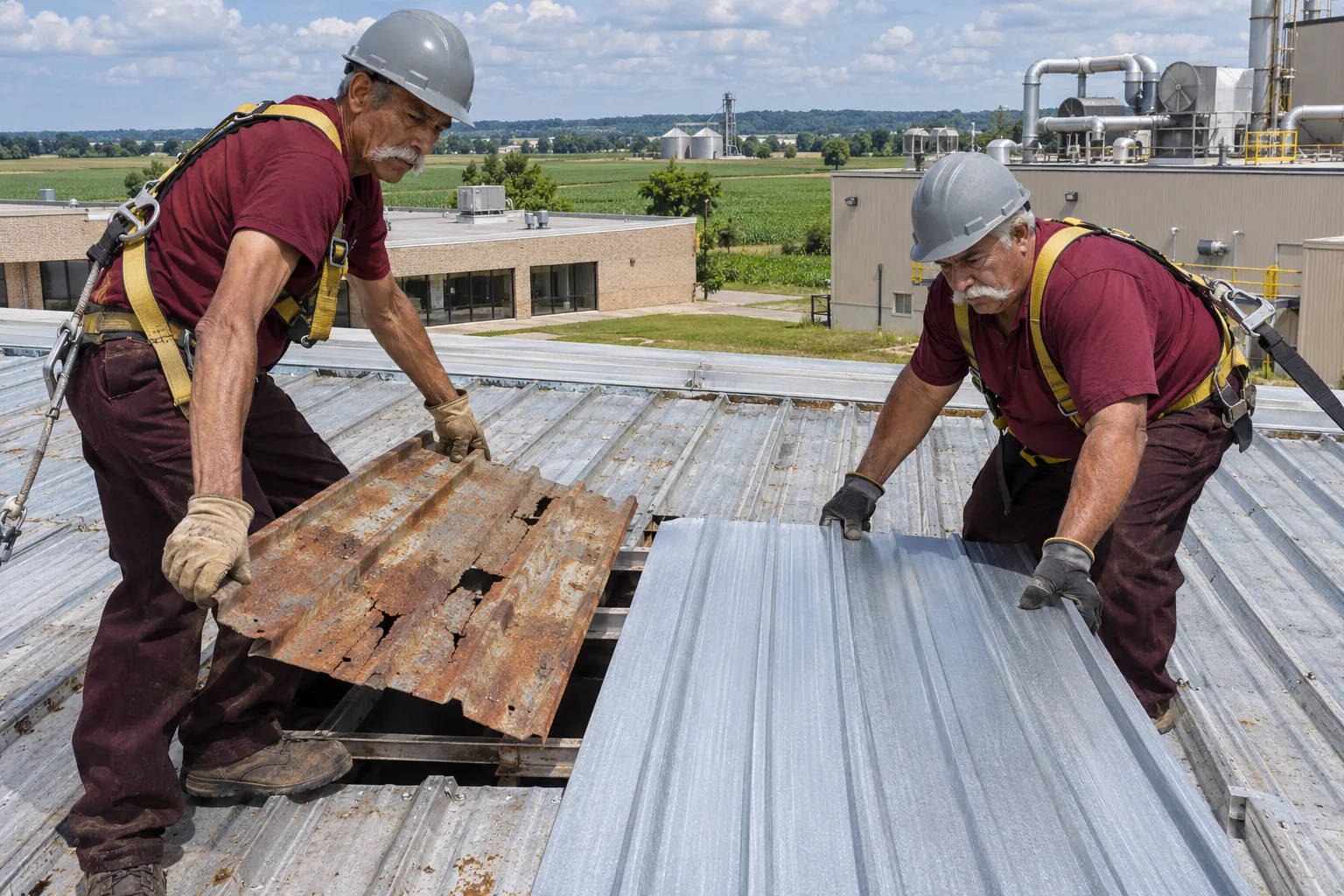
Metal shops and storage buildings near campus get worn screws, open laps, and rusted panels repaired.
More on commercial metal roof repairCall with the room location and when the drip started. We will help you protect the space and set up the roof visit.
(574) 384-0757
Four steps, each planned around the people inside.
We agree on access, work hours, intake protection, and tenant notices before the roof walk starts.
Every seam, curb, and drain is checked, and test cores near the leaks show how far wet insulation reaches.
Each small section is opened, repaired with matching material, and closed watertight before the building fills again.
Photos of every repaired roof area go to the owner, with a short note on anything still to watch.
Besides West Lafayette, we repair commercial roofs in Lafayette and four more towns nearby.
Outside these towns? Call us or send us a message.
| Town | County | What We See On Roofs There |
|---|---|---|
| LafayetteHome Base | Tippecanoe County | Grain processing and aerospace plants, warehouses, and downtown blocks with drains, curbs, and laps to watch. |
| Frankfort | Clinton County | Warehouse and plant roofs with long membrane seams and drains that hold water. |
| Crawfordsville | Montgomery County | Older masonry buildings that leak at parapets, coping joints, and internal drains. |
| Rensselaer | Jasper County | Farm, equipment, and storage buildings with loose fasteners and wind-lifted trim. |
| Monticello | White County | Storm checks for lifted edge metal, punctured membrane, and dented panels. |
What owners and managers of occupied buildings ask us.
Permits Here
The city Building Department issues permits for new construction, structural changes, and electrical work, and asks unsure owners to call. Leak and flashing repairs often fall outside that, while deck or structural repairs can fall inside it. New Chauncey district projects go to city historic review first.
The price follows the roof system, the size of the wet area, how many curbs and drains are involved, access to the roof, and how much phasing the building needs. Work split into small nightly sections takes longer than one open area. The free estimate comes after the roof walk.
Working Around People
Yes. We open one small section at a time, close it each evening, and shield the air intakes near the work. Loud and hot work are set with the building manager, so tenants know when to expect them. Strong-smelling adhesives stay away from intakes.
Yes. Offices, research space, retail, and restaurants near campus are a large share of the repairs we do here. Each job starts with access and work hours, because these buildings rarely close for roof work. Restaurants with kitchen exhaust on the roof get extra attention at fan curbs, where grease and heat wear out flashing early.
Finding A Contractor
Call us at (574) 384-0757 and give the building address. We cover West Lafayette from the same base as Lafayette, set a roof walk, and send a written scope with photos after the inspection. The scope lists each seam, curb, and drain to be repaired, so you can compare it with any other quote you collect.
The space is covered first, then we trace the drip on the roof to the curb, vent, or lap above it. The repair uses low-odor materials near intakes, and the area is tested with water before we sign off. If the drip lines up with nothing on the roof, we check ducts and condensate lines next.
Tell us about the building and who works under the roof. We will plan the repair around them.