Rooftop Unit Curbs
Flashing around HVAC curbs splits from vibration and foot traffic. Water then follows duct, gas, and electrical lines through the deck and appears far from the unit.
Commercial Roof Leak Repair
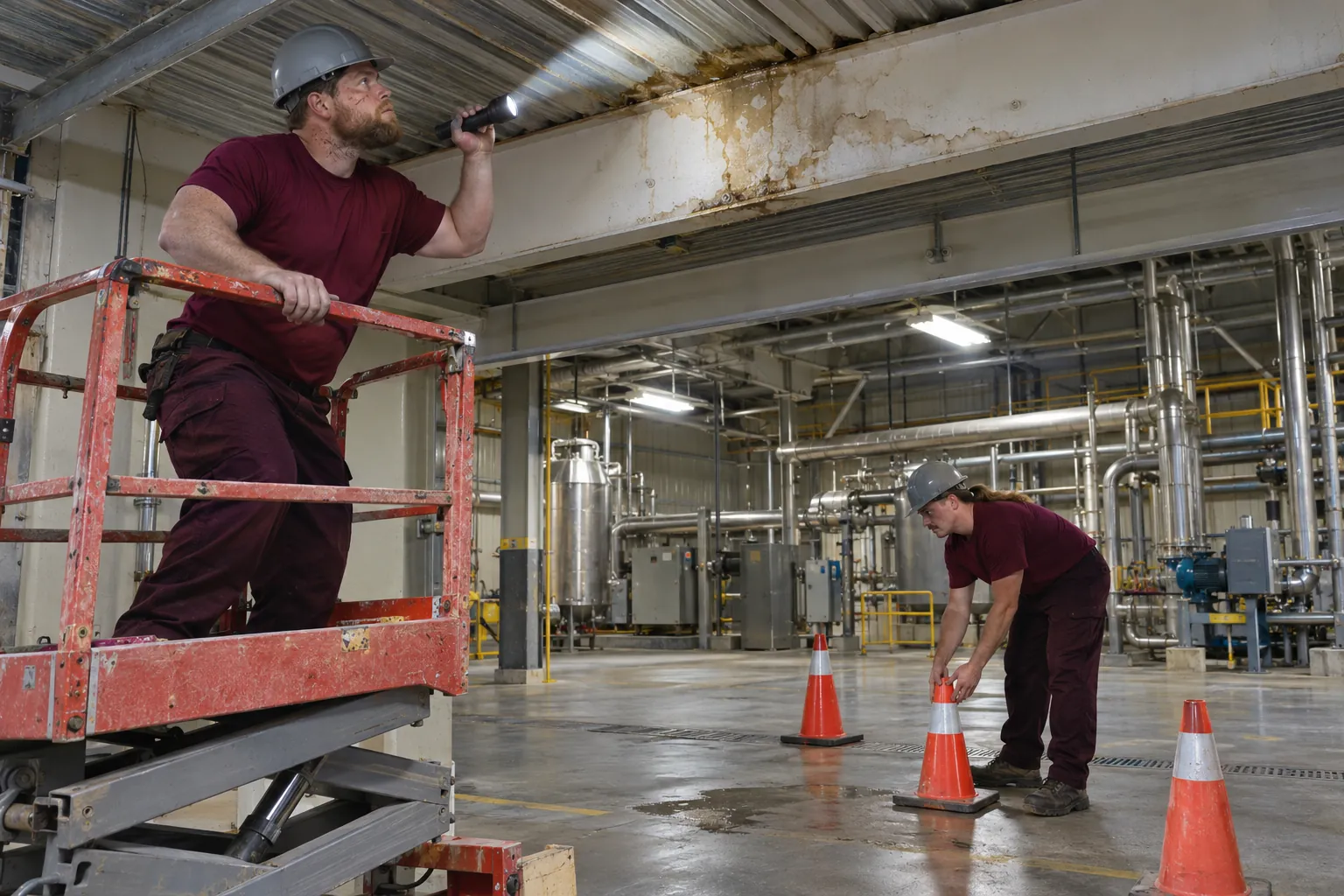
As a Lafayette commercial roof leak repair contractor, we trace water from the stain inside to the opening on the roof, then repair and test it.
Some drips come from pipes, ducts, or condensation. Lafayette commercial roof leak repair starts by sorting those out with the clues in this table.
| Clue | Roof Leak | Other Source |
|---|---|---|
| Timing | During or right after rain or snowmelt | On cold mornings with no rain, a sign of condensation |
| Location | Under a seam, curb, drain, or penetration | Under ducts, pipes, or a unit condensate line |
| Pattern | Grows with each storm | Spread evenly across the deck underside |
| Water | Dirty, carrying grit from the roof | Clean droplets on cold steel |
| Next step | Trace upslope on the roof | Check insulation, vapor control, and HVAC lines |
These six openings cause most of the leaks we trace.
Flashing around HVAC curbs splits from vibration and foot traffic. Water then follows duct, gas, and electrical lines through the deck and appears far from the unit.
Ice, leaves, and grit block strainers. Water rises above the drain's flashing and finds any weak lap within a few feet of the bowl.
Coping caps open at their joints, and masonry above the roofline cracks. Rain enters the wall and comes out at the ceiling line, well away from the roof surface.
Curbs around skylights and roof hatches carry their own flashing and gaskets. Once those dry out, every heavy rain sends water down the curb walls.
Melting snow held behind ice at drains and gutters sits against seams for days. Openings that shed a normal shower let that slow water through.
Water that gets under the membrane travels through the insulation board. The drip shows up where the deck has a low spot, often yards from the opening.
A leak fixed at its source changes more than one ceiling tile.
Tracing from the stain back along the deck to a seam, curb, or drain means the repair lands on the opening, so the same tile stays dry next storm.
Board soaked by a long-running leak holds water against the deck and the membrane. Replacing it stops hidden rust on the deck and the musty smell inside.
Servers, stock, and machines under a known leak are covered during work, and the repair order keeps that area of roof open for the shortest time.
Each repair comes with dated photos of the source and the fix, which helps owners and tenants apply their lease terms to the roof work.
Call with the building address and where the water is landing. We will talk through protecting what is below and plan the first roof visit.
(574) 384-0757
Leak repairs go from the inside of the building to the roof and back again.
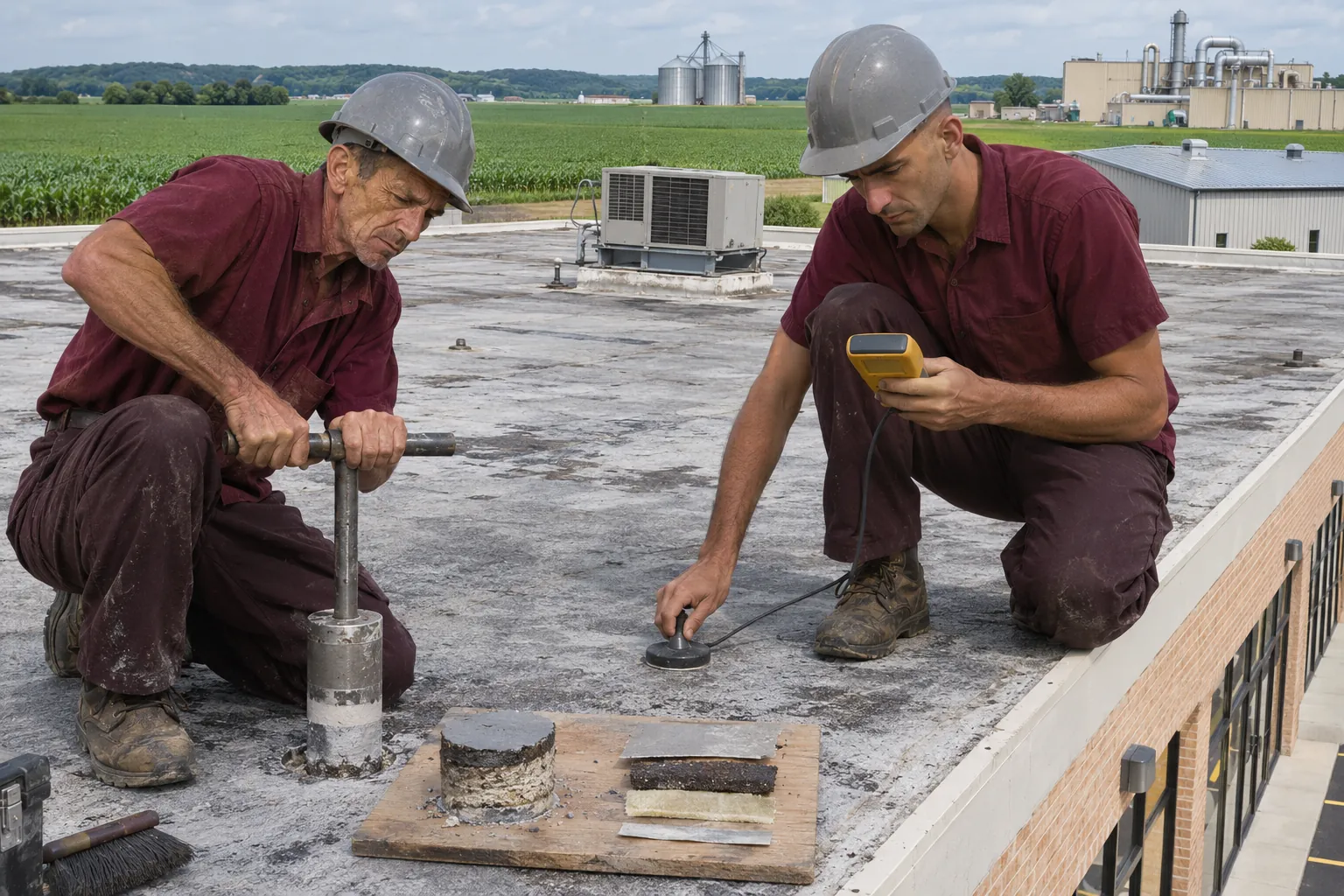
We mark every stain, drip, and wet tile on a floor plan and look at the deck underside to see which way the water is running.
Up top, we check each seam, curb, drain, and penetration upslope of the stain, and probe or core wherever the trail leads.
An open seam, split flashing, or loose drain clamp is repaired with matching material, and wet insulation around it is replaced.
A hose test or the next rain confirms the repair holds. You get the floor plan, photos, and notes for the building file.
The source often turns out to be a flat roof seam, a metal lap, or plant equipment.
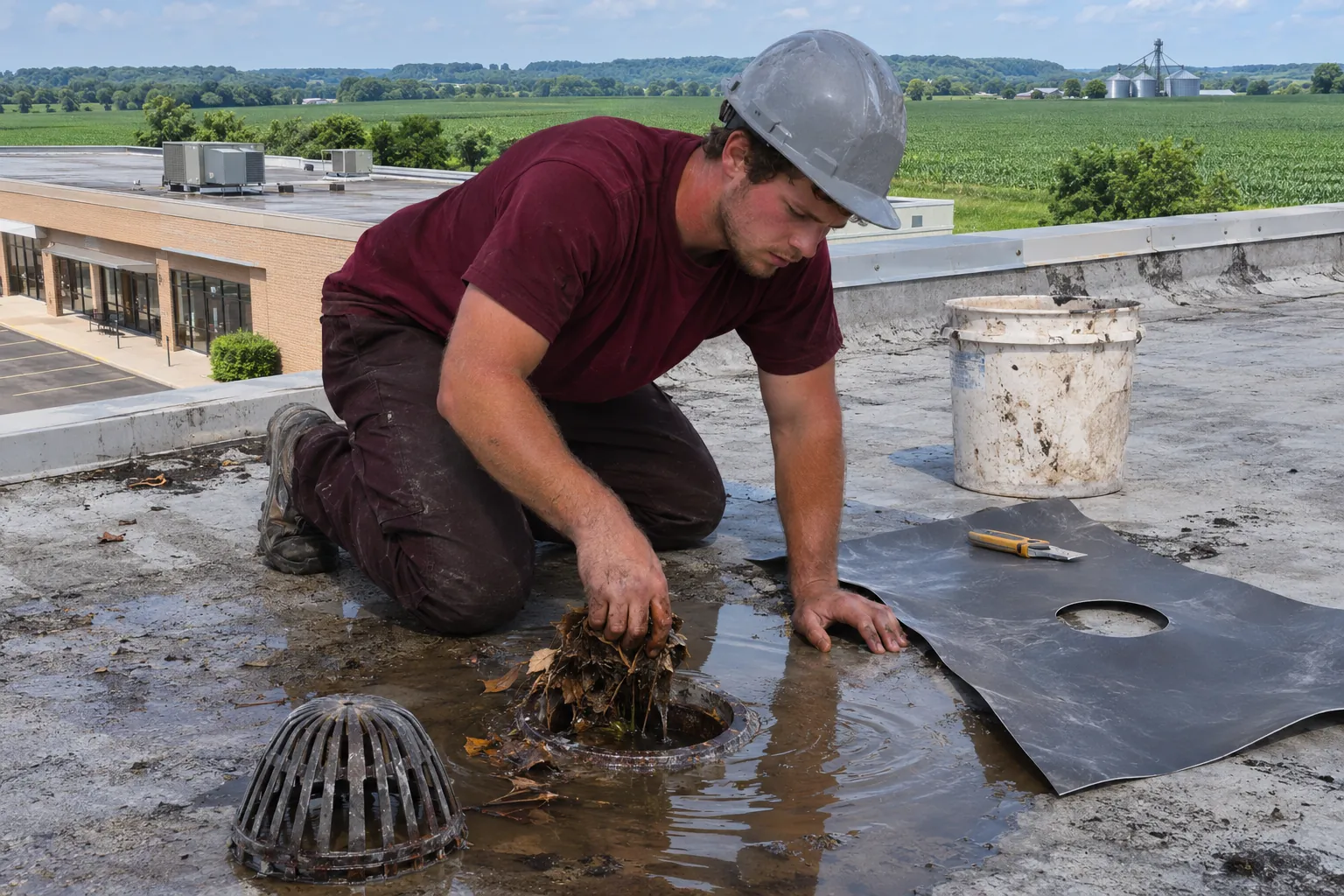
When the trace ends at a lifted membrane lap or a high drain, the flat roof repair covers the seam, the drain, and the wet board around them.
More on flat roof repair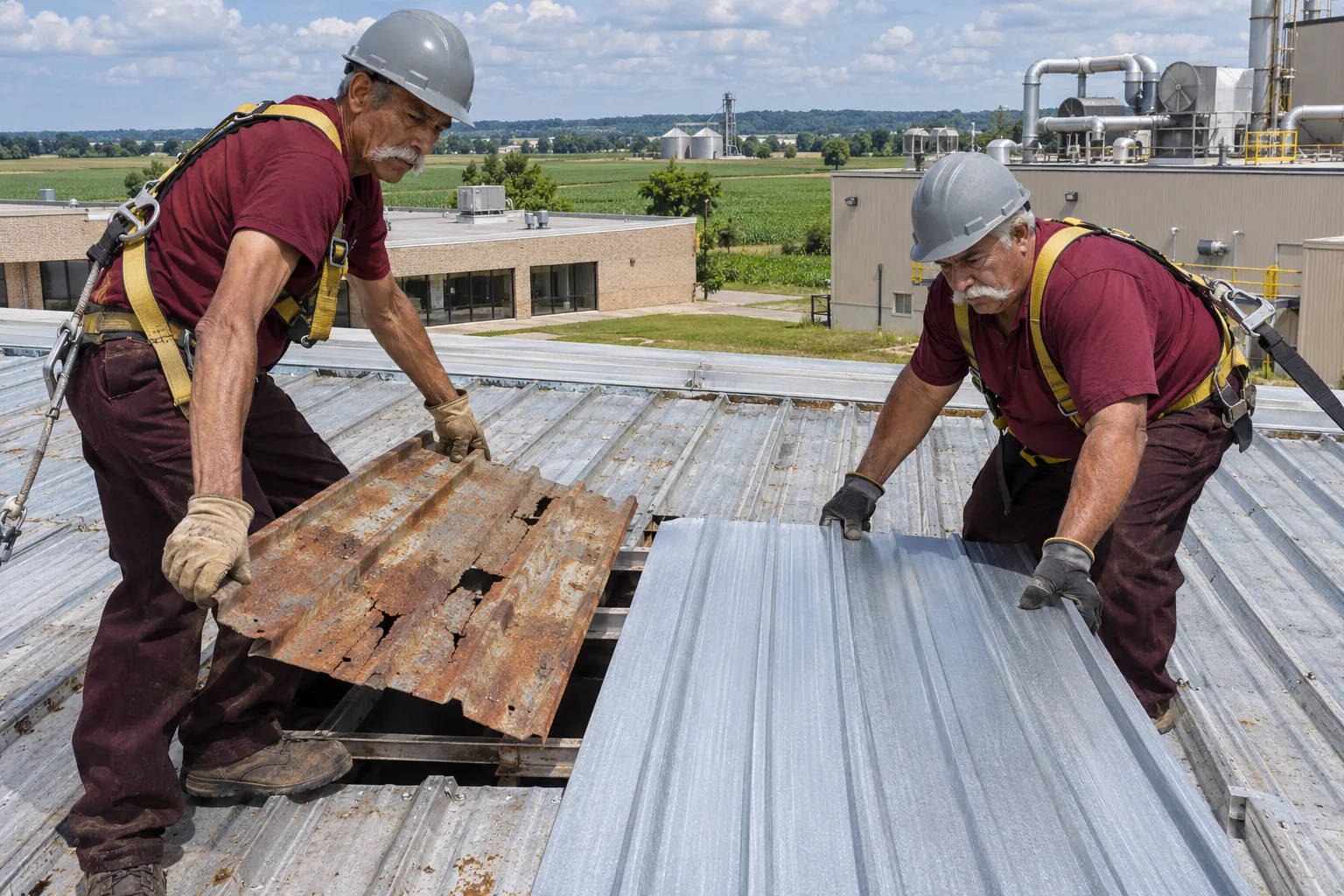
Traces that stop at a screw line or an end lap lead to new fasteners, fresh butyl tape, or a matching panel.
More on commercial metal roof repair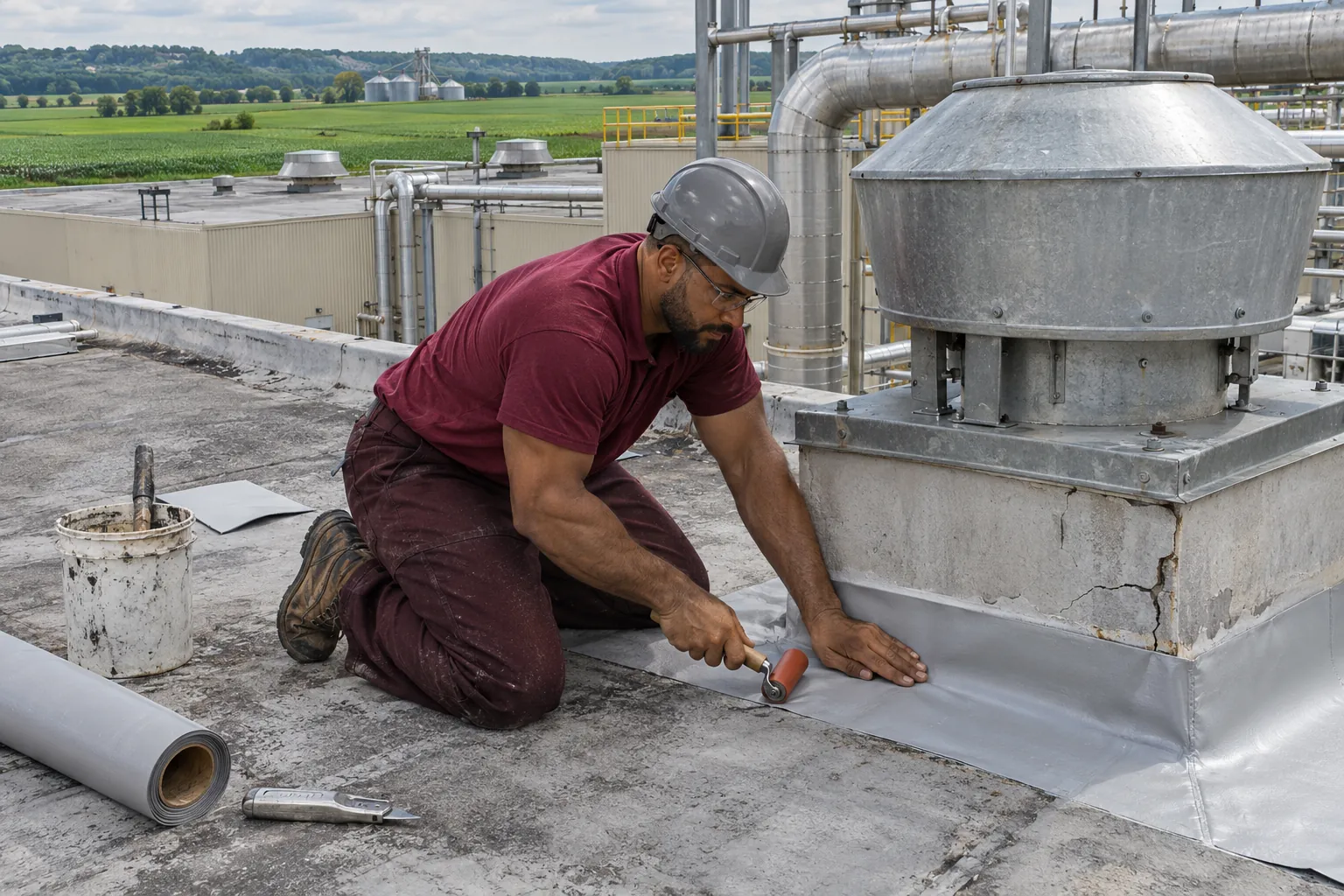
Leaks over production lines often start at fan curbs or process vents, which we repair around shifts and safety rules.
More on industrial roof repairCommon questions about finding, fixing, and paying for roof leaks.
Rooftop Units
We start at the curb flashing, since most unit leaks come from flashing that split, pulled away, or lost its counterflashing, or from gaps where ducts, gas, and wiring pass through. The repair re-flashes the curb, seals each penetration, and sends condensate away from it. Walkway pads protect it afterward.
Ice plugs drains, scuppers, or gutters, and meltwater backs up against seams, flashings, and laps for days. Small openings that shed a quick rain let that slow water through, and each freeze widens them. The fix seals low-point seams and flashings, clears and re-flashes drains, and adds slope where water sits.
Cost Of A Leak
How long the trace takes, the roof system, how much membrane, flashing, or insulation is replaced, roof height and access, and how tricky the leak point is, such as a parapet or an equipment curb. Several small leaks are often fixed in one trip. The free estimate comes once the source is found.
As soon as you can get it on the schedule. Every rain pushes more water into the insulation, and wet board spreads the damage well beyond the first opening. A temporary dry-in protects the space below until the permanent repair is done.
Leases And Landlords
It comes from the lease. Gross leases commonly put roof leaks on the landlord, net leases can shift repair costs to the tenant, and most leases ask tenants to report leaks quickly. The repair and notice clauses govern, and an attorney answers legal questions. A dated leak report with photos helps both parties.
Yes. A dated note with the location, the time it started, and a photo of the stain gives the owner what the lease notice clause asks for. It also gives us a head start: the floor location of the drip is the first clue in tracing the opening on the roof.
Describe where the water shows up and when. We will trace it to the roof and repair the opening.