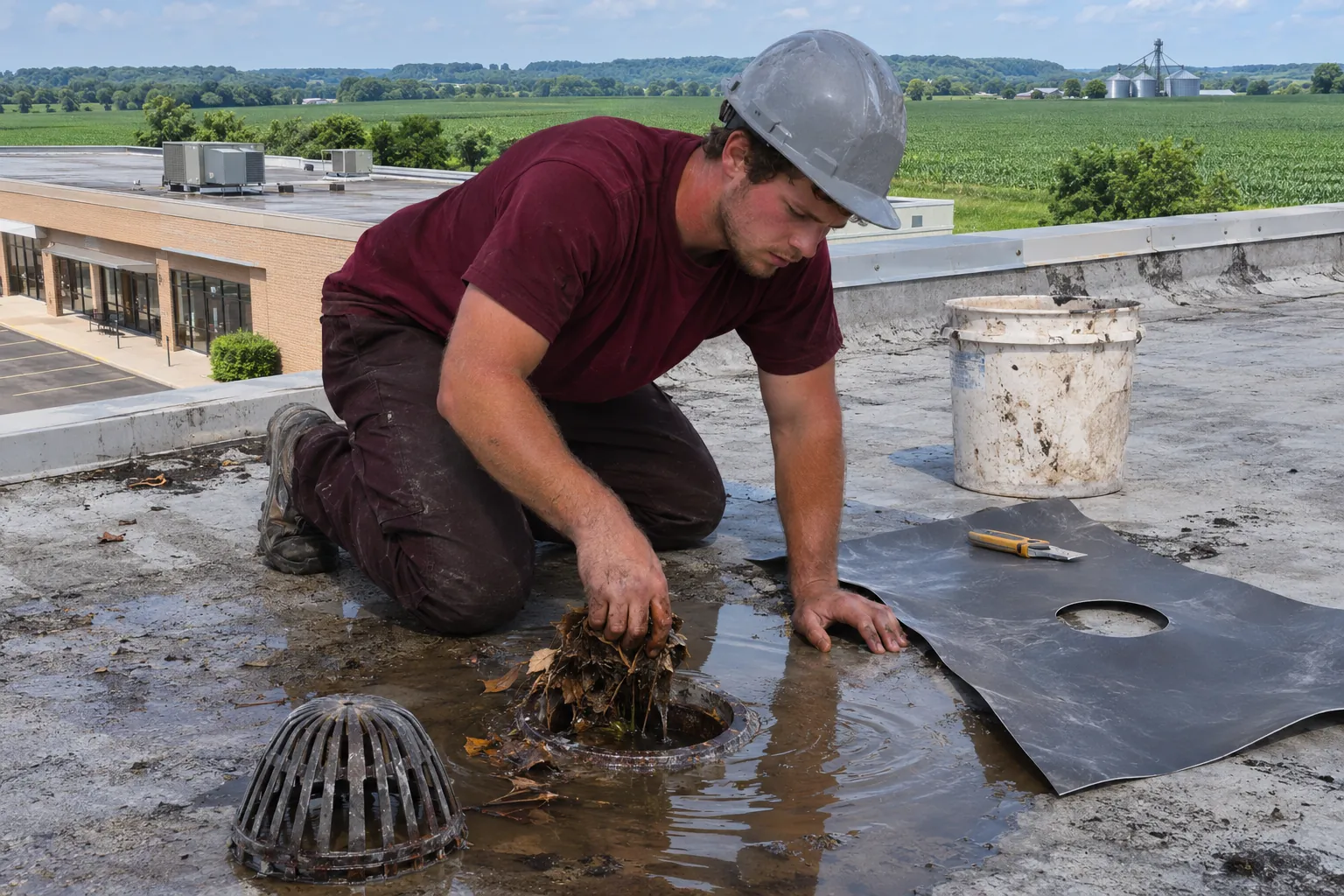
Ponding Around Drains
Water that rings a drain for days means the drain sits higher than the deck around it, or the strainer is packed with leaves and grit. The membrane under that ring wears out first.
Flat Roof Repair
As a Lafayette flat roof repair contractor, we fix TPO, EPDM, and modified bitumen roofs with matching material, from one split seam to a whole wet section.
Use this table to see where Lafayette flat roof repair fits and where the cores point toward a bigger job.
| Condition | Repair Fits | Plan For More |
|---|---|---|
| Seams | One or two lifted laps | Laps opening along whole runs |
| Membrane | Flexible, takes a weld or bond | Brittle, cracked, or shrinking from the edges |
| Insulation | Wet only around the opening | Wet through large areas of the roof |
| Drains | Clogged strainer or loose clamping ring | Drain sitting high with wide ponding around it |
| Leak pattern | One source you can point to | Stains appearing in several rooms at once |
Six conditions account for most of the flat roof work we do in town.
Water that rings a drain for days means the drain sits higher than the deck around it, or the strainer is packed with leaves and grit. The membrane under that ring wears out first.
Heat-welded and taped laps both open with age. A lifted edge lets wind drive rain under the sheet, and the wet spreads along the insulation board before it ever drips.
Trapped moisture turns to vapor on sunny days and pushes up bubbles in modified bitumen and older built-up roofs. A blister that cracks open becomes a direct path for water.
Gravel stops and coping strips hold the membrane edge down. Once the nails back out or the metal bends in wind, the perimeter flaps and the first row of seams starts to fail.
Mastic patches and tape fixes from years past dry out and curl. Water slips under their edges, and a patch made from the wrong material seldom bonds to the roof beneath it.
Base flashing climbs walls, curbs, and parapets. Shrinking membrane pulls it away at the corners, opening a gap that heavy rain fills faster than the drains can empty it.
Repairing the flat roof you have keeps the dry parts working and spends money only where the leak is.
Moisture readings outline the wet board, so the cut stays tight to the damage. A smaller opening means less exposure to rain during the work and less new material to buy.
TPO is welded to TPO, and EPDM is joined with EPDM primer and seam tape. Matching the system lets each new seam bond the way the original roof did.
Resetting a clamping ring, replacing a broken strainer, and lowering a high drain sends water off the roof instead of leaving a pond that ages the membrane.
Photos of each seam, drain, and wall flashing show what was fixed and what to watch, so the next roof budget starts from facts on the roof.
Call with the drain locations and how long the water sits. We will check the drains and the insulation around them on the first visit.
(574) 384-0757
Each flat roof repair follows the same four steps, sized to the damage the cores show.
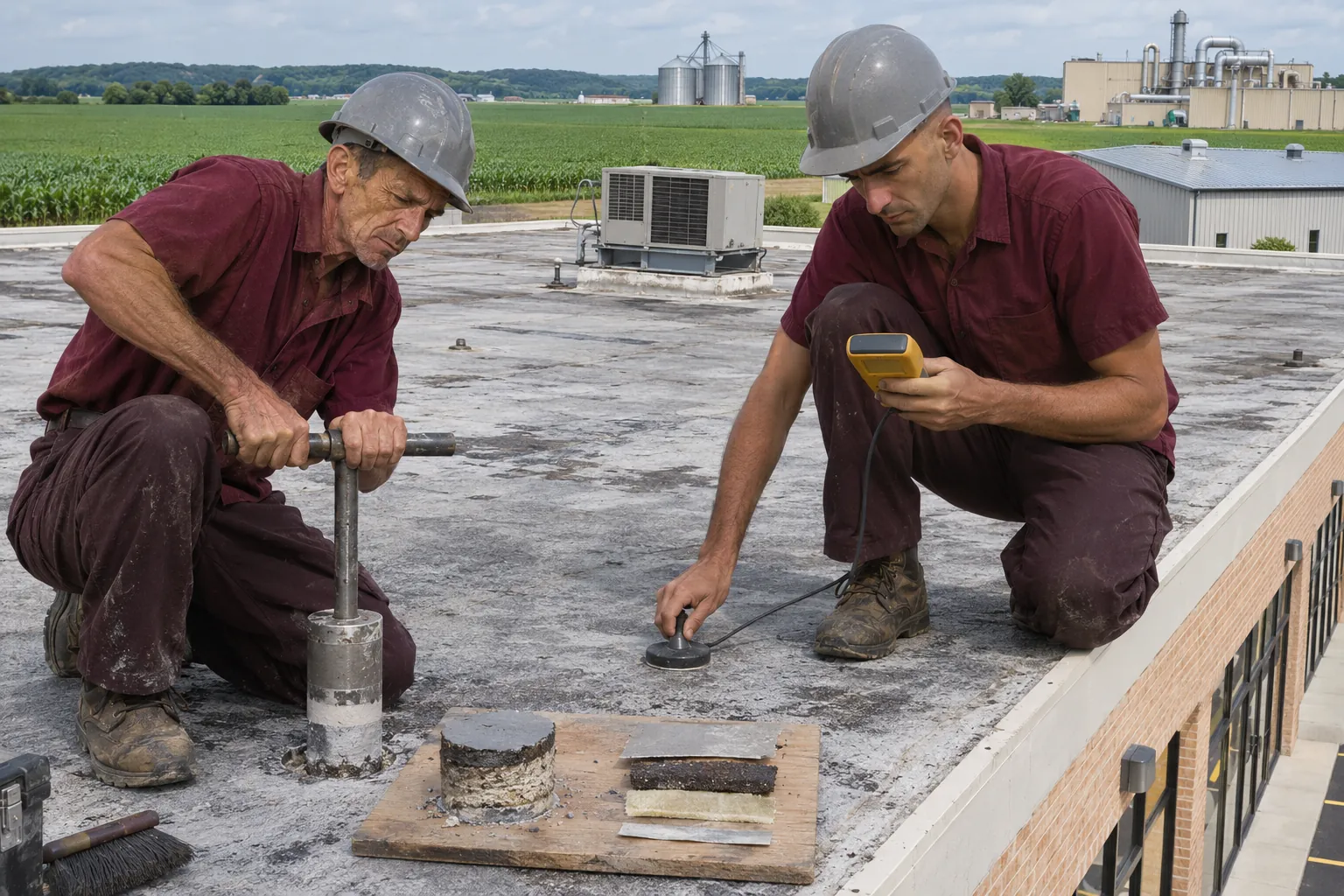
Before cutting anything, we take meter readings across the roof and pull a few cores near the leak. The readings mark how far wet board runs under the membrane.
Damaged membrane and wet insulation come out in a clean rectangle. New board goes in at the same thickness, so the patch sits flush with the roof around it.
New membrane overlaps dry, firm roof by several inches on every side and is welded, taped, or torched to match the system already in place.
Seams are probed with a hand tool, drains are run with a hose, and photos of the finished patch go into the report you keep.
Flat roofs often share a building with metal sections, rooftop units, and process equipment.
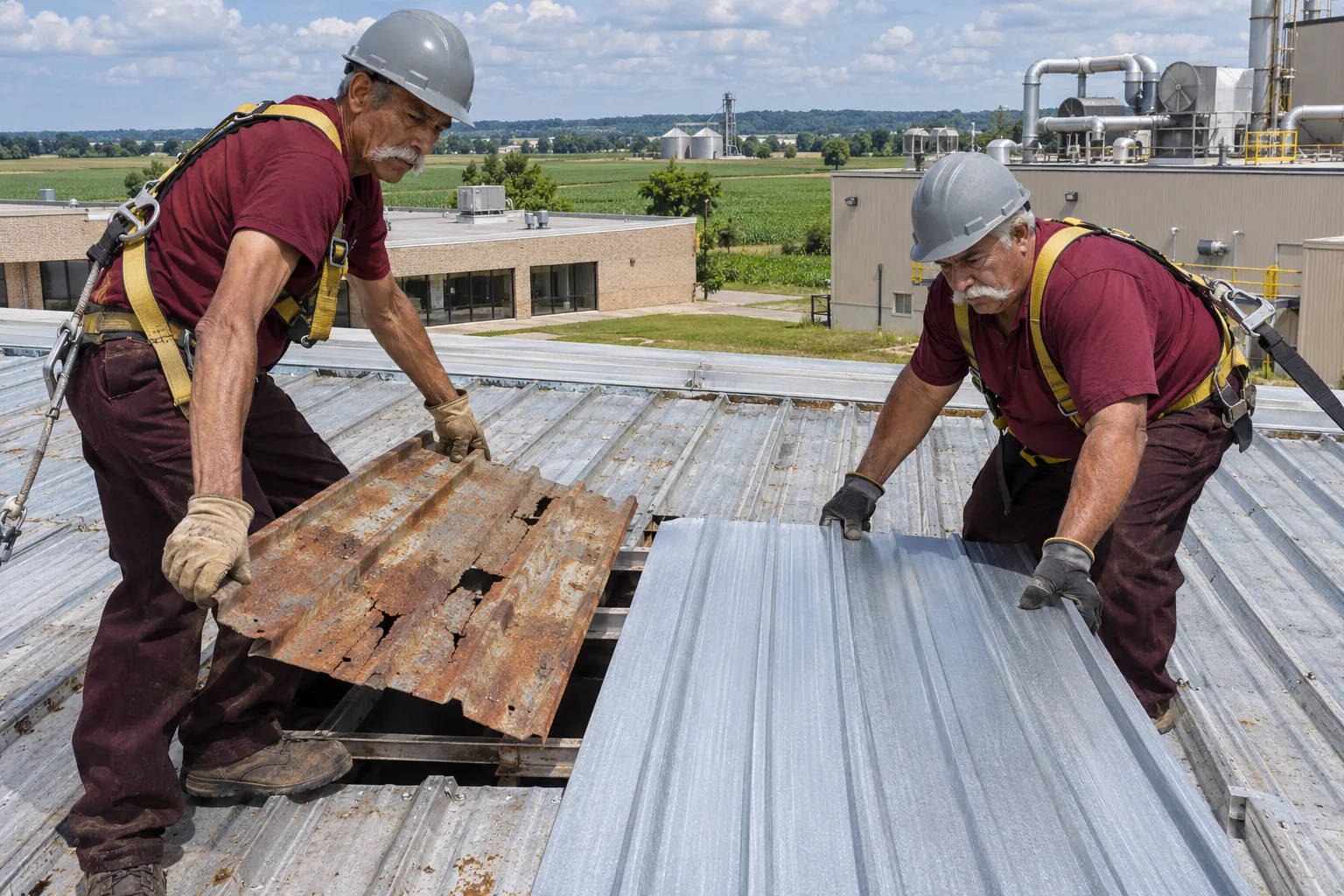
Metal additions, canopies, and sheds next to a flat roof leak at screws and laps. We reseal those laps and swap rusted panels to match.
More on commercial metal roof repair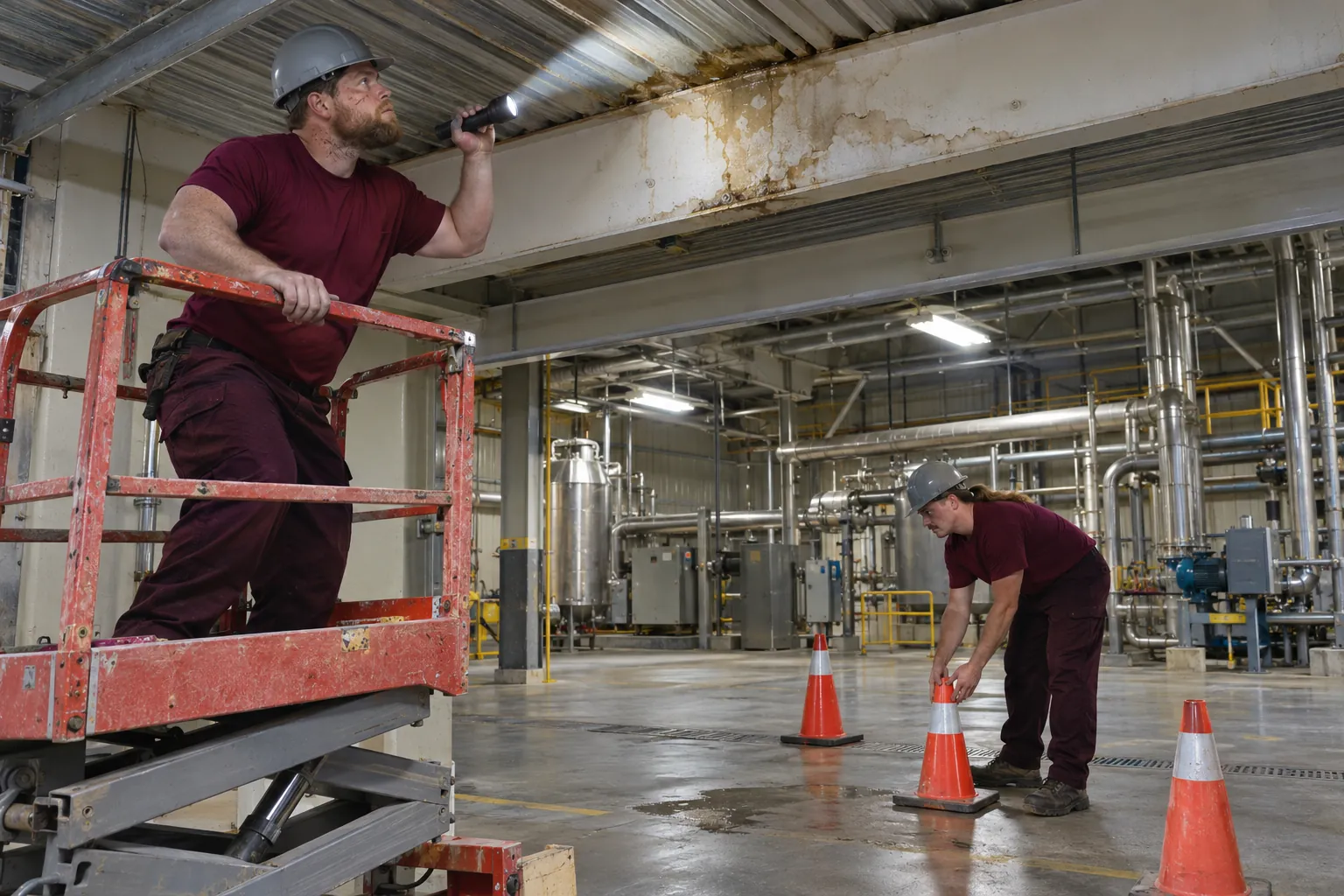
If a stain inside lines up with nothing you can see on the membrane, we trace the water from the ceiling back to its opening.
More on commercial roof leak repair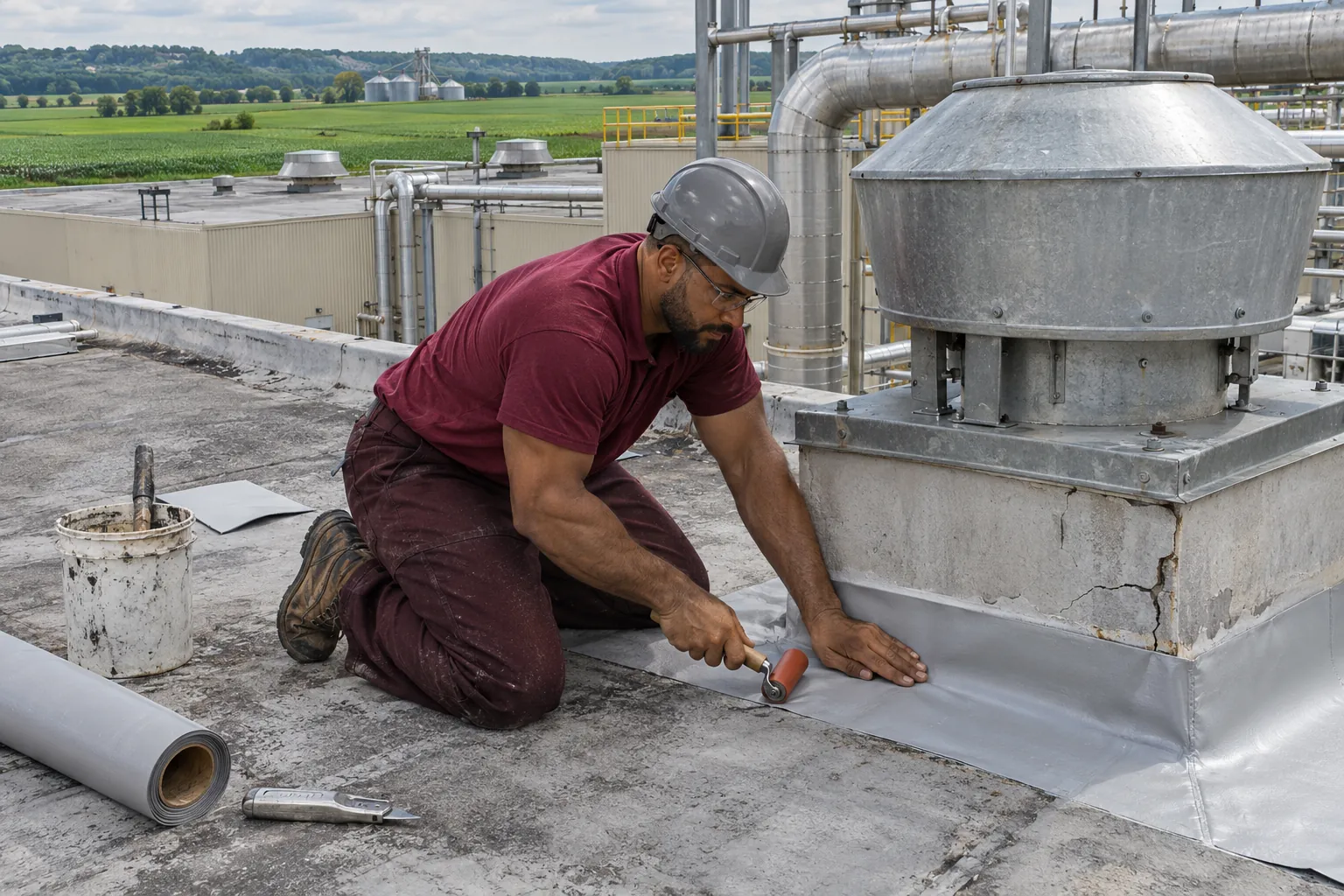
Flat plant roofs with fans, stacks, and long curb runs get flashing and residue repairs planned around production shifts.
More on industrial roof repairWhat owners ask before we cut into a flat roof.
Choosing The Repair
A patch handles one puncture, one open seam, or one failed flashing on a roof that is otherwise dry. Brittle or shrinking membrane, leaks in many rooms, or wet board across large areas point to replacement. A moisture survey and a few cores show how much of the roof is still dry.
Match the roof that is there. TPO gets heat-welded TPO, EPDM gets EPDM with seam tape, and modified bitumen gets compatible torch or cold-process material. The area is cleaned and primed, wet board is replaced, and the patch runs well past the damage. Mixed materials cause many repeat leaks.
Drains And Ponding
We work on the strainer, the clamping ring, the drain bowl, and the membrane flashing around it: broken strainers replaced, rings reset or replaced, membrane re-flashed into the bowl, and clogged lines cleared. A drain sitting above the roof around it is lowered, or the area is built up, so water reaches it.
First we find the cause: a high drain, insulation crushed by foot traffic, or a deflected deck. Then drains are lowered or cleared, crushed board is replaced, and tapered insulation or crickets steer water to the drains. Over labs and offices, only a small area is opened at a time.
Cost And Seasons
The roof system, the size of the damaged area, how much wet insulation comes out, the number of drains, curbs, and flashings involved, roof height and access, and whether the old membrane still accepts a patch. Grouping repairs into one visit lowers the trip cost. The free estimate follows a roof inspection.
Water in a seam or flashing freezes and expands in winter, so small gaps grow into leaks by spring. Summer heat softens and blisters older membranes and dries out sealant at penetrations. Both hit seams, flashings, and drains, which is why spring and fall checks catch damage early.
Send the address and where the water shows up. We will check the seams, drains, and insulation and write up the repair.