Heat At Exhaust Fans
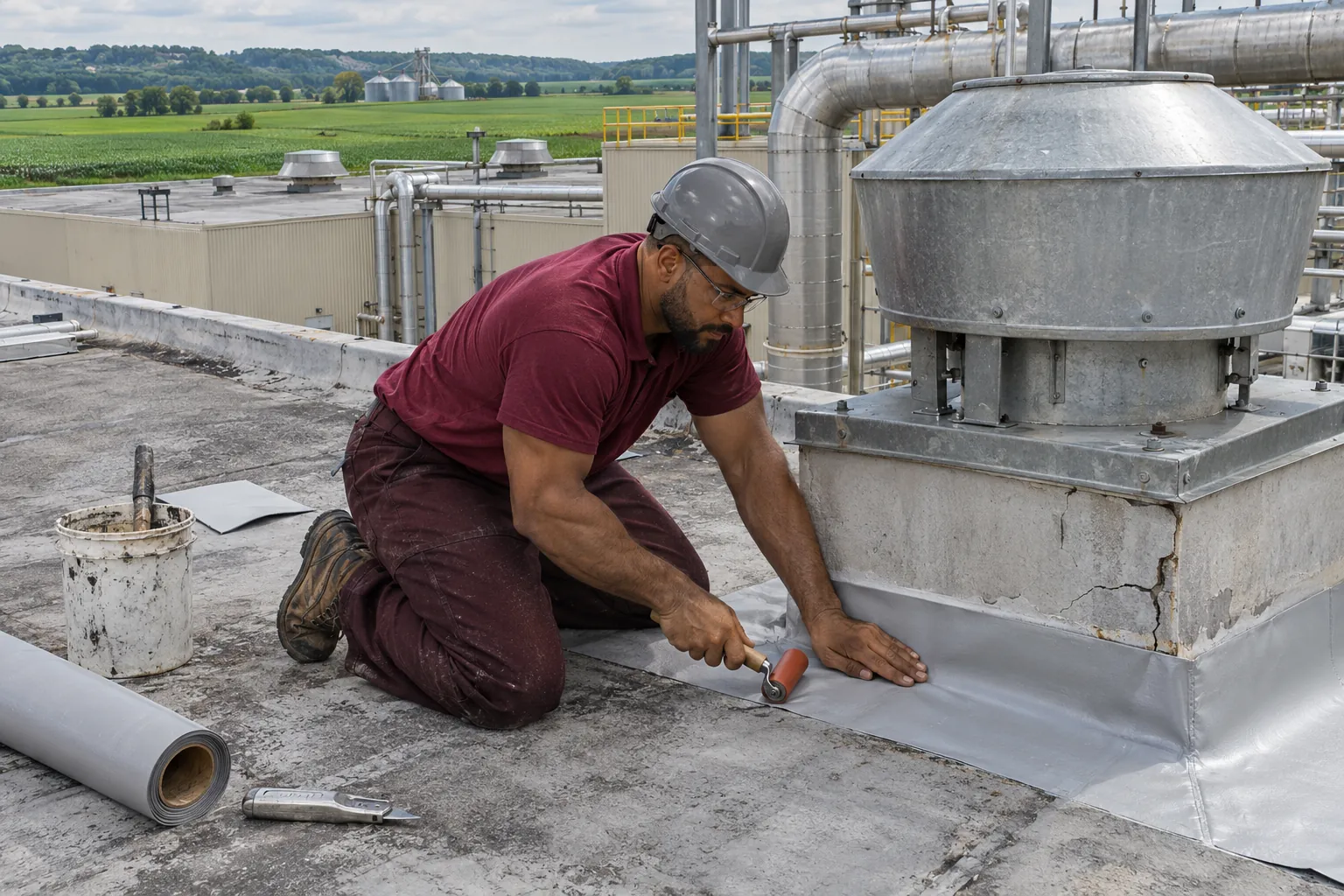
Hot exhaust dries out sealant at fan curbs and softens membrane nearby. Cracks open at the base flashing, and every rain runs into the curb.
Industrial Roof Repair
As a Lafayette industrial roof repair contractor, we repair curbs, stacks, fan flashing, and residue-worn roof areas on working plants, scheduled around production.
Plant roofs wear in zones. Lafayette industrial roof repair starts with the zones in this table.
| Zone | What Wears | What We Repair |
|---|---|---|
| Equipment curbs | Flashing split by vibration and service traffic | Re-flash curbs and add walkway pads |
| Exhaust and stacks | Sealant baked by heat, residue on the membrane | Replace boots and collars with heat-rated material |
| Process vents | Membrane softened by oils, dust, or chemicals | Cut out damaged membrane and add a resistant cap sheet |
| Drains and gutters | Clogged by dust and debris | Clear, reset clamping rings, and re-flash |
| Open field | Punctures from tools and dropped parts | Patch, then mark work paths |
Production puts wear on a roof that an office building never sees. Here is where it shows up first.
Hot exhaust dries out sealant at fan curbs and softens membrane nearby. Cracks open at the base flashing, and every rain runs into the curb.
Oils, grain dust, and chemical vapor settle on the roof around vents. Some membranes swell or soften under that residue and split at the seams.
Compressors and big fans shake the deck. Screws in nearby metal panels back out a little each month until their washers stop sealing.
Technicians cross the same path to equipment for years. Dropped tools, ladder feet, and heavy boots wear through the membrane along that route.
Dust from production collects in gutters and drain strainers. After a storm, the water backs up and spills over the flashing into the building.
Old pipe stands and capped curbs from removed equipment get forgotten. Their flashing fails slowly, and nobody checks them until a stain appears.
Planned repairs on a plant roof protect what runs under it.
Repair areas on the roof are opened one at a time and closed watertight before each shift change, so lines and storage below keep running.
Torch and heat-weld work on the membrane follows the plant's hot work permits, with a fire watch and extinguishers set before anything is lit.
Fixing curb flashing, fan boots, and clogged drains on a schedule removes the leaks that otherwise show up during storms and shutdown weeks.
A risk-ranked repair list with roof photos lets plant managers fund the urgent items now and plan the rest for later budget years.
Call with the plant address and the area affected. We will plan roof access with your safety contact and get the leak traced.
(574) 384-0757
Plant repairs add safety planning to the usual repair steps.
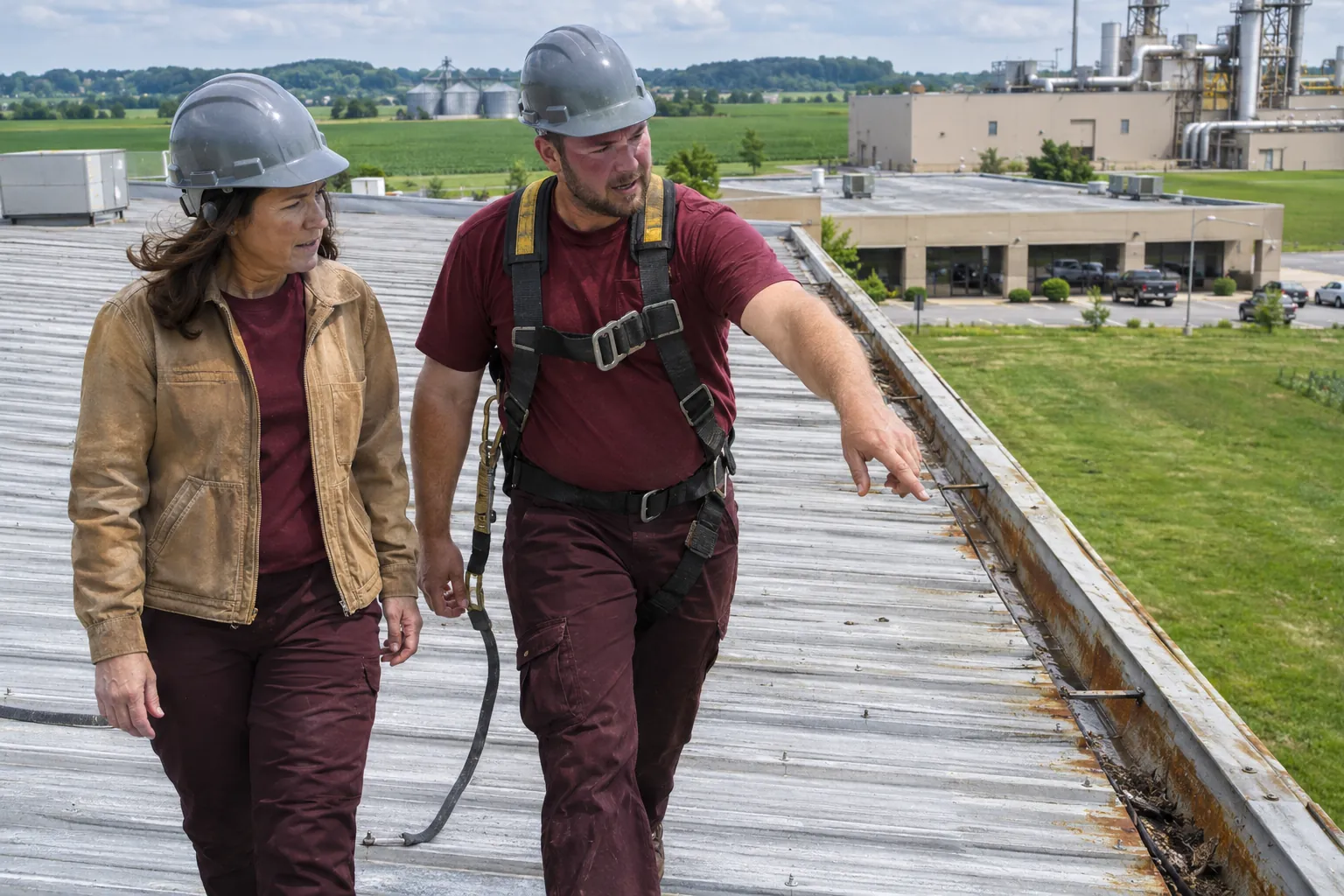
Before anyone climbs, we set roof access, escorts, restricted areas, hot work permits, and the hours the plant can give us on the roof.
The whole roof is walked: curbs, stacks, fans, drains, edge metal, and residue zones. Cores or a moisture scan confirm wet insulation. Abandoned curbs and pipe stands are checked too.
Repairs follow the risk ranking, one zone at a time, with each opening sealed watertight before the crew leaves for the day.
You receive photos of every repair and a spring and fall upkeep list covering drains, curbs, and fasteners. Repeat problem areas are flagged for the next budget.
Plants mix flat roof areas, metal buildings, and leaks that surface over equipment.
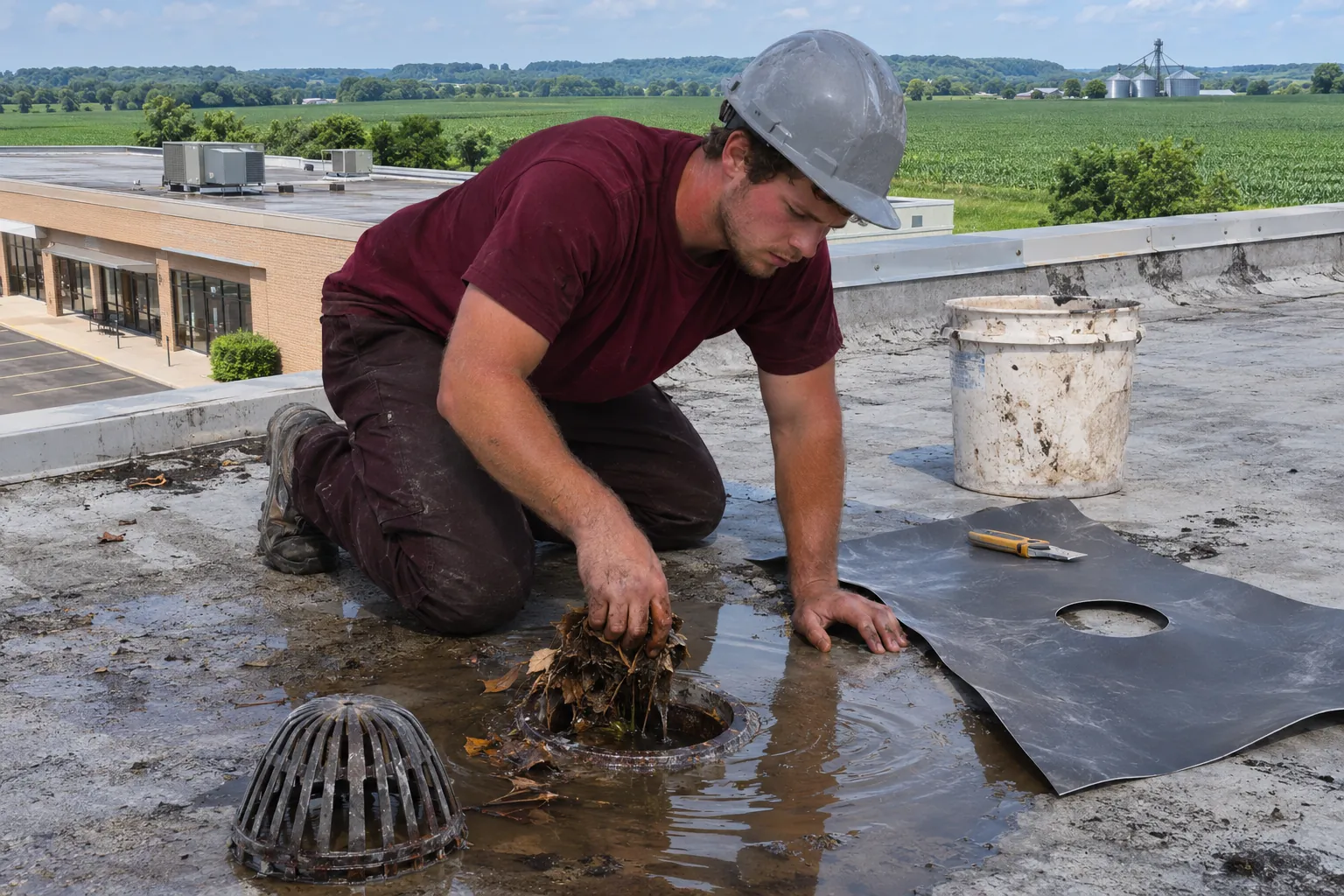
Office wings and low-slope warehouse sections on a plant campus get membrane, seam, and drain repairs of their own.
More on flat roof repair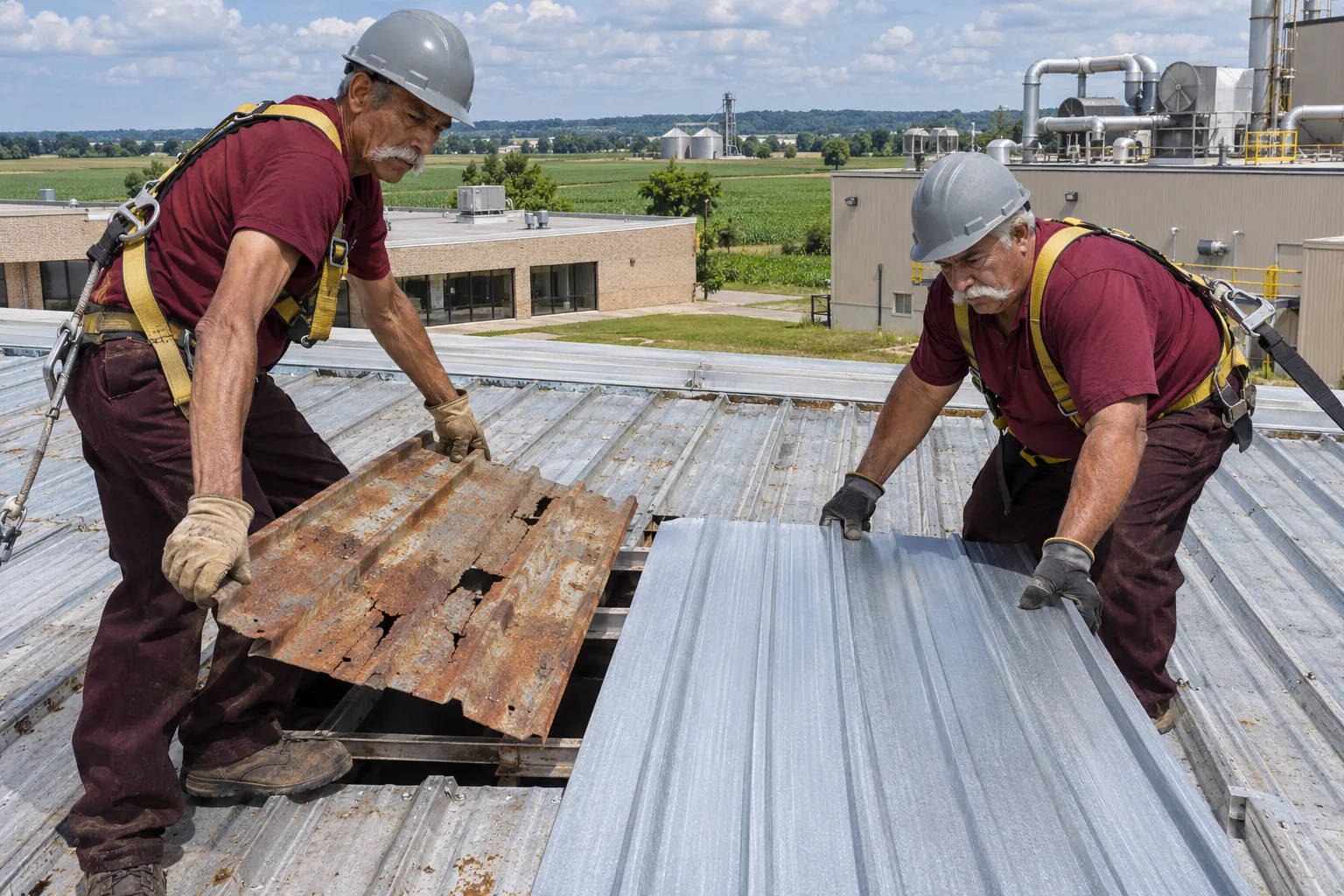
Metal production and storage buildings get new fasteners, resealed laps, and rusted panels swapped for matches.
More on commercial metal roof repair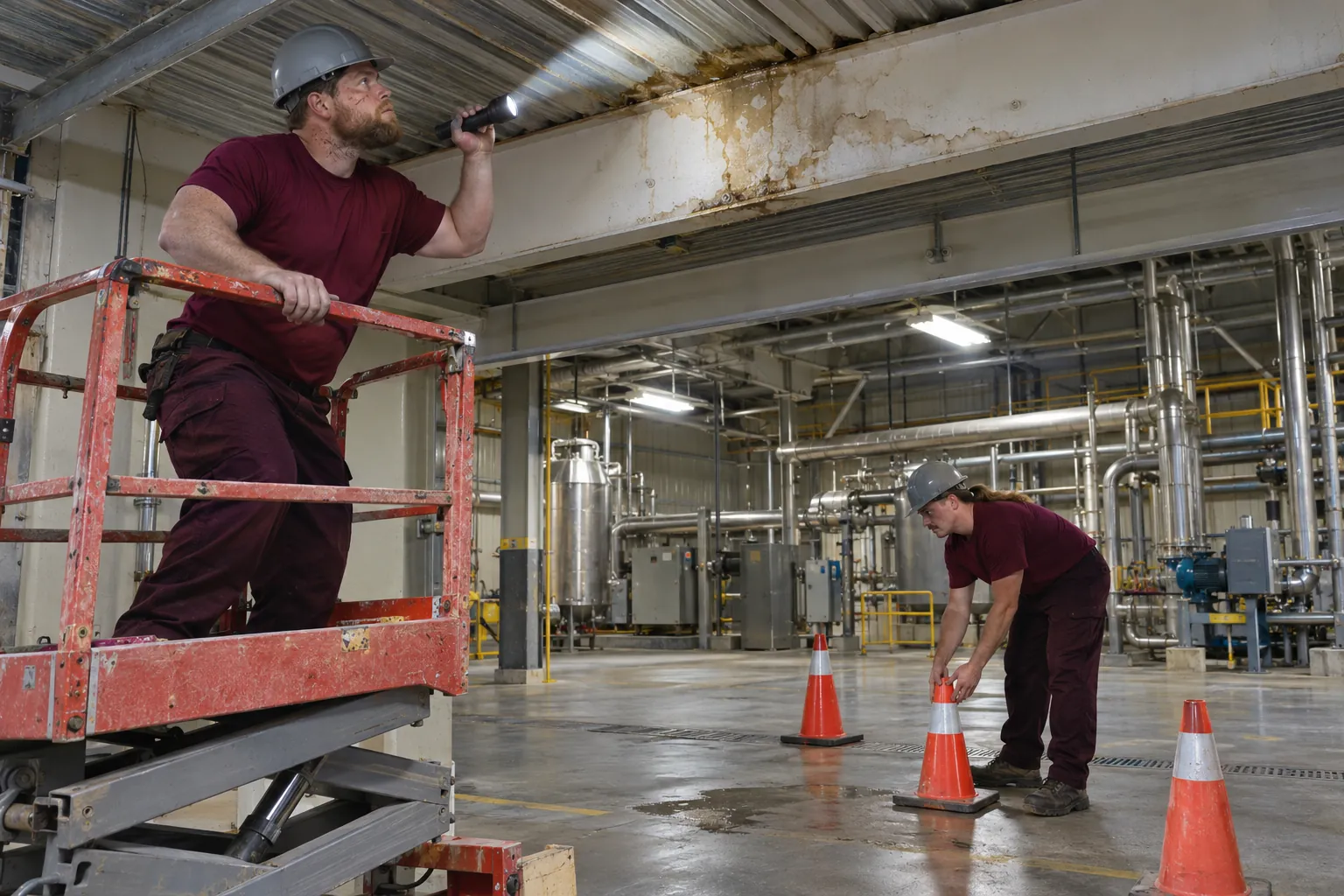
A drip over a machine gets traced from the floor up to the curb, vent, or lap that lets it in.
More on commercial roof leak repairWhat plant and facility managers ask about upkeep, cost, and timing.
Upkeep And Inspections
Most plants do well with a spring and fall visit plus a check after big storms. Each visit clears drains, gutters, and scuppers, reseals flashing at curbs, stacks, and pipes, tightens or replaces metal roof fasteners, removes debris and residue, and patches small punctures. A photo log shows which areas keep needing attention.
We walk the full roof and every penetration: membrane or panels, seams, curb and stack flashing, drains, edge metal, equipment supports, and residue buildup. Cores or a moisture scan confirm wet insulation. Safety rules, restricted areas, and escorts are agreed first, and the report ranks every finding by risk with photos.
Cost And Contractors
Roof size and system, the count of curbs, stacks, and penetrations, how much wet insulation comes out, lifts and access, plant safety and hot work requirements, and any limits on hours around production. Heat or chemical exposure can call for tougher material. The free estimate follows a roof survey. Several small repairs found on one walk are priced together.
Look for a contractor who inspects in person, shows you the leak sources in photos, and writes a scope naming each repair, the materials, and how it fits around production. Ask about fall protection, hot work procedures, and insurance, and plan the work ahead of Indiana snow and freeze-thaw season.
Codes And Weather
Indiana commercial buildings fall under the Indiana Building Code, 675 IAC 13, adopted by the Fire Prevention and Building Safety Commission. The state rules page lists the 2014 code, based on the 2012 International Building Code, as in effect. Local building officials enforce it for a given plant. Deck or structural repairs get confirmed first.
Spring and fall give the steadiest working weather and line up with the upkeep visits. Leaks are repaired whenever they appear, with a temporary dry-in in winter until membrane and sealant can be applied at the temperatures the maker lists. Planned shutdowns are another good window, since roof work over idle lines carries less risk to production.
Share the plant address and your safety contact. We will plan access, inspect the roof, and rank the repairs.